

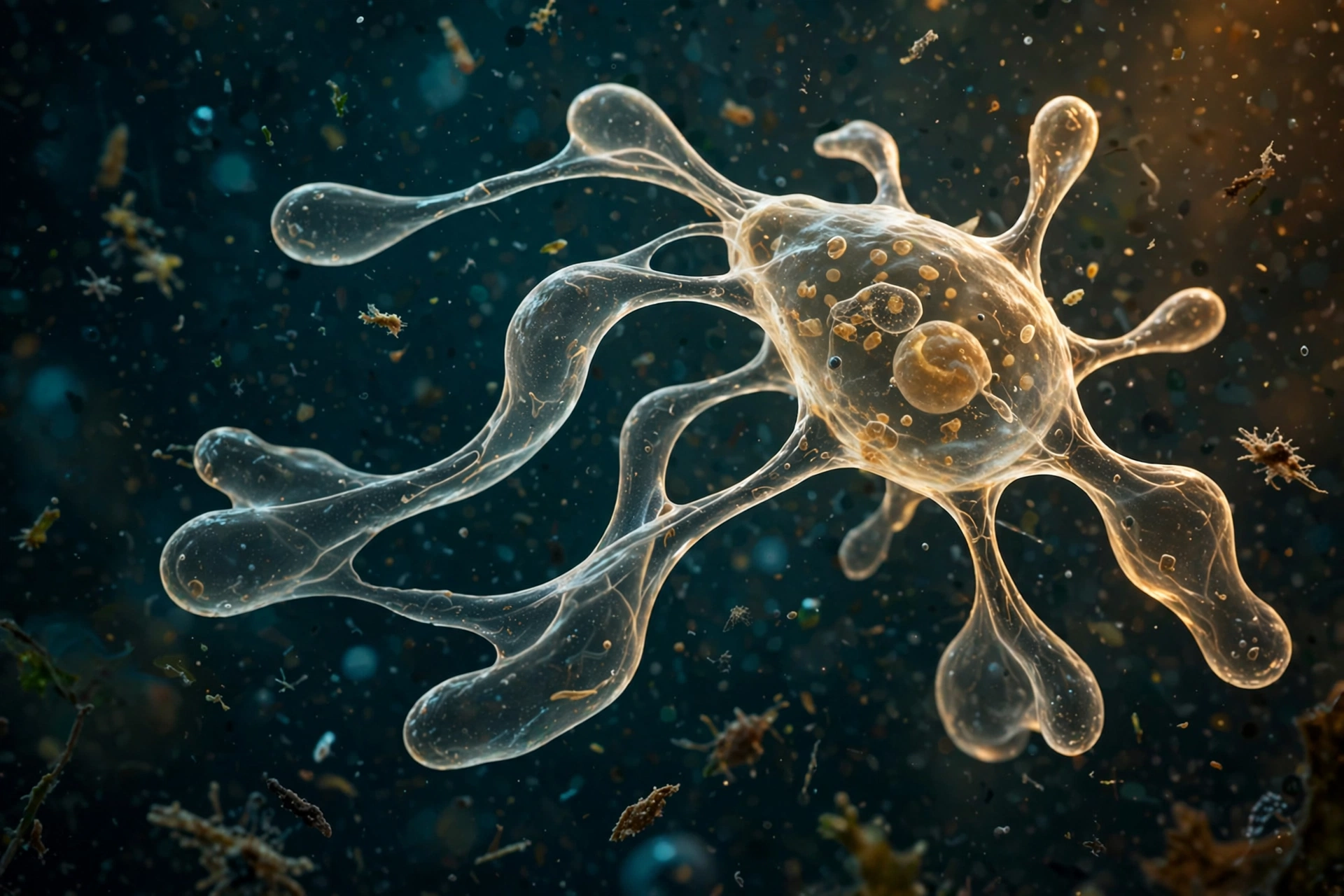
Two deaths in August 2026 — a 17-year-old in North Carolina and an 8-year-old in Louisiana — have pushed searches for “brain eating amoeba symptoms” to their highest point of the year. The cause in both tragedies was Naegleria fowleri, a microscopic organism found in warm freshwater that can cause a devastating brain infection called primary amebic meningoencephalitis (PAM). It is extremely rare — fewer than 10 Americans are diagnosed each year — but it is fatal in more than 97% of cases, which is why knowing the symptoms and how to stay safe matters so much.
In this complete guide, we explain what the brain-eating amoeba really is, how infections happen, the early warning signs to watch for, the details of the 2026 cases that triggered the current surge of interest, and the exact prevention steps recommended by the CDC and state health departments.
Key Facts: Brain Eating Amoeba at a Glance
- Organism: Naegleria fowleri — a free-living amoeba (single-celled organism) in warm freshwater
- Infection: Primary amebic meningoencephalitis (PAM) — a rare brain infection
- How it infects: Water containing the amoeba goes up the nose; it travels along the olfactory nerve to the brain. It cannot infect you through swallowing water, and it does not spread person to person
- Early brain eating amoeba symptoms: Severe headache, fever, nausea, and vomiting — typically starting about 5 days after exposure (range 1–12 days)
- Later symptoms: Stiff neck, confusion, seizures, hallucinations, coma
- Fatality rate: More than 97% — death usually occurs within 5 days of symptom onset
- US cases: Only 167 reported between 1962 and 2024; fewer than 10 per year
- 2026 cases: 17-year-old Moises Ponce Mendoza (North Carolina, died August 31); 8-year-old Lillian Smart (Louisiana, died August 22)
What Is the Brain-Eating Amoeba?
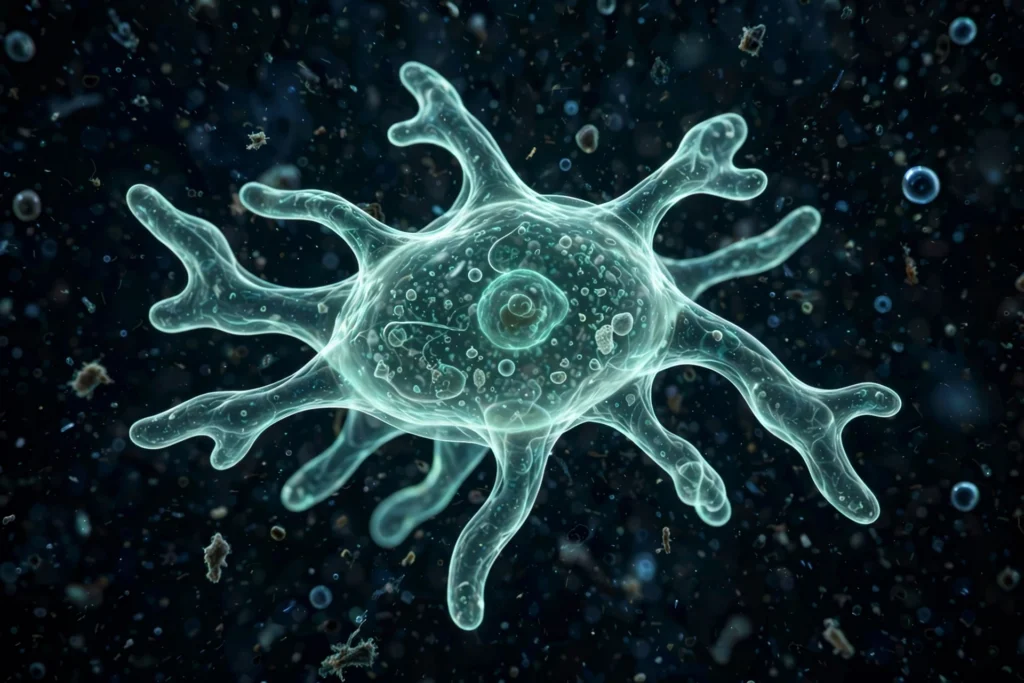
Despite its frightening nickname, the “brain-eating amoeba” is not a monster from science fiction. Naegleria fowleri is a naturally occurring, single-celled organism — an amoeba — that lives in warm freshwater environments around the world, including lakes, rivers, ponds, streams, and hot springs. Under a microscope, it is a tiny blob of living jelly, too small to be seen without magnification, and it normally spends its life eating bacteria.
The amoeba only becomes dangerous to humans under one very specific circumstance: when water containing it is forced up the nose. From the nasal passages, the organism can travel along the olfactory nerve — the nerve connected to our sense of smell — straight into the frontal lobe of the brain, where it begins destroying brain tissue. The resulting infection is called primary amebic meningoencephalitis (PAM).
According to the CDC, the amoeba grows best at higher temperatures — North Carolina health officials note it thrives at temperatures up to 115°F — which is why infections happen most often during summer months, when long hot spells raise water temperatures and lower water levels in lakes and rivers. It is not found in salt water, and it cannot survive in properly maintained and chlorinated swimming pools.
The 2026 Cases That Sparked the Current Surge
Searches for the brain-eating amoeba began climbing sharply in early September 2026 after health officials released new findings about two heartbreaking summer deaths.
The North Carolina teen: a water feature under investigation
In late August 2026, a 17-year-old in central North Carolina became critically ill with a rare brain infection. The teen, identified by his family as Moises Ponce Mendoza, was hospitalized on August 22 after days of headaches and worsening symptoms. Laboratory testing confirmed a Naegleria fowleri infection on August 26, and he died on August 31 — just days after health officials first announced he was critically ill.
At first, investigators could not determine where the teen had been exposed. But on September 15, the North Carolina Department of Health and Human Services (NCDHHS) released a report identifying the most likely source: a man-made water feature at El Futuro, a community-based mental health care center in Durham County. Interviews with the teen’s family indicated he had contact with the water feature during the likely exposure period, including splashing water on his face. The water feature had been closed by the Durham County Department of Public Health on August 28, and samples later tested positive for Naegleria fowleri at the CDC.
“Our hearts are broken for the young boy who lost his life and for his family,” El Futuro said in a statement, adding that the center would continue to fully cooperate with public health officials.
The Louisiana girl: a lake swim
Just over a week before the North Carolina teen died, 8-year-old Lillian Smart of Louisiana died on August 22, 2026, after contracting the same amoeba. State health officials said she may have been exposed while swimming in a lake in Louisiana — the more classic exposure route for this infection.
The two deaths, occurring within about ten days of each other, were the main driver of the September surge in public interest — and a reminder that while PAM is vanishingly rare, late summer is its peak season.
How Does the Brain-Eating Amoeba Infect People?
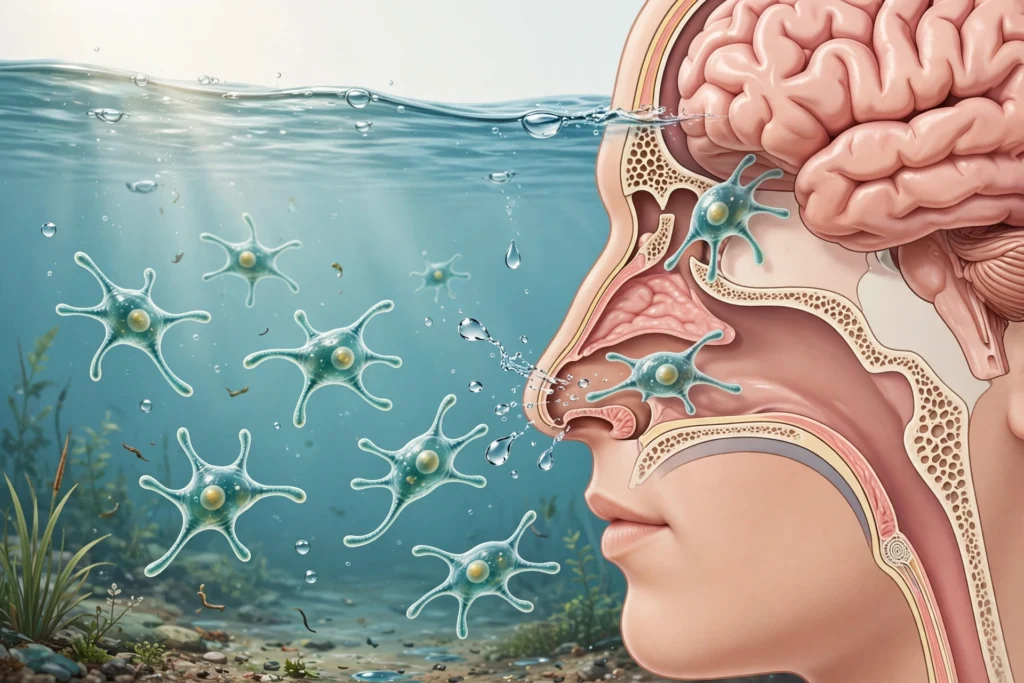
Understanding the infection route is important, because it explains both how infections happen and — just as importantly — how they don’t.
The only confirmed route of infection is through the nose. This typically happens during freshwater activities where water is forced into the nasal passages: jumping into a lake, diving, water-skiing, or dunking your head underwater. A few infections have also occurred when people used contaminated tap water to rinse their sinuses or cleanse their nasal passages — the reason health agencies insist on distilled or boiled water for neti pots and nasal rinses. In very rare instances, people have been infected from recreational water like splash pads or a surf park that did not have enough chlorine.
What does not cause infection is just as clear, according to the CDC:
- Swallowing water containing the amoeba does not cause illness.
- You cannot catch it from another person and cannot pass it to others.
- Salt water, properly chlorinated pools, and properly treated tap water are safe.
Once water carrying the amoeba enters the nose, the organisms travel through the nasal tissue and along the olfactory nerves, passing through the cribriform plate in the skull to reach the brain. Studies suggest the amoeba may actually be attracted to the chemicals nerve cells use to communicate. The brain is, tragically, an accidental food source: in nature, N. fowleri eats bacteria, not brains.
Also worth knowing: exposure does not equal infection. The amoeba is described by North Carolina health officials as “extremely common” in freshwater lakes, rivers, and ponds, especially in summer. Millions of people are exposed every year by swimming in these waters, yet only a handful develop PAM. As Durham County’s medical director, Dr. Jeff Jenks, put it: “You have a greater chance of dying from a lightning strike than from Naegleria fowleri infection.”
Brain Eating Amoeba Symptoms: The Early Warning Signs
One reason PAM is so dangerous is that its early symptoms look like many common illnesses — including bacterial meningitis, which is also serious and can be deadly. Anyone who has recently been in warm freshwater and develops these symptoms should seek medical care immediately and tell the provider about the freshwater exposure.
According to the CDC and state health officials, brain eating amoeba symptoms typically follow this timeline:
Early symptoms (usually starting ~5 days after exposure, range 1–12 days)
- Severe frontal headache — the most characteristic early sign
- Fever
- Nausea and vomiting
As the disease progresses
- Stiff neck
- Confusion and lack of attention to people and surroundings
- Loss of balance and coordination
- Seizures
- Hallucinations
- Coma
The illness moves with terrifying speed: death usually occurs within 5 days of the start of symptoms (the full range is 1 to 18 days). The average time to death is about 5.3 days from symptom onset. Because the disease mimics bacterial meningitis early on, diagnosis is almost always late — and brain imaging is often not helpful because findings are typically normal in the early course of the disease.
This is why the “tell your doctor” part matters so much. Diagnosis requires specific laboratory testing — typically examination of cerebrospinal fluid (CSF) obtained by spinal tap — and those specialized tests are available in only a few labs in the United States, including the CDC. Physicians who suspect PAM can consult the CDC for additional testing. A healthcare provider can determine whether you have meningitis, what is causing it, and the best treatment — but only if they know to look for it.

Brain Eating Amoeba Symptoms vs. Bacterial Meningitis
A common question is how PAM differs from ordinary bacterial meningitis, since early brain eating amoeba symptoms overlap with it so closely. Both cause headache, fever, stiff neck, nausea, and vomiting. The key differences are the exposure history (recent warm freshwater contact or nasal rinsing with untreated water) and the speed of progression — PAM can move from first symptom to coma in as little as two to three days.
Doctors distinguish the two with spinal fluid analysis. Bacterial meningitis shows bacteria under the microscope and responds to antibiotics; PAM shows the amoeba itself in the CSF, and standard antibiotics do not work against it. This distinction is life-or-death, because the window for effective treatment is measured in hours, not weeks — and bacterial meningitis is far more common, so it is what doctors suspect first.
How Is PAM Diagnosed and Treated?
Diagnosis of a Naegleria fowleri infection relies on laboratory tests rather than imaging. Cerebrospinal fluid sampling may reveal the live amoeba moving under the microscope. Because these infections are so rare and hard to detect, diagnosis sometimes happens only after a person has died — one of the grimmest facts about this disease.
Treatment combines strong dosages of antimicrobial drugs — including miltefosine, fluconazole, amphotericin B, and related medications — with aggressive management of brain swelling and targeted temperature management. It is a race against a pathogen that destroys brain tissue extremely rapidly.
The honest truth is that the odds are bleak: with a fatality rate above 97%, only a handful of patients worldwide have ever survived. But survival is not zero, and every documented survivor was diagnosed and treated aggressively and early — which circles back to the single most important piece of advice: get to a doctor fast, and mention any recent freshwater exposure.
Where Does Naegleria Fowleri Live?
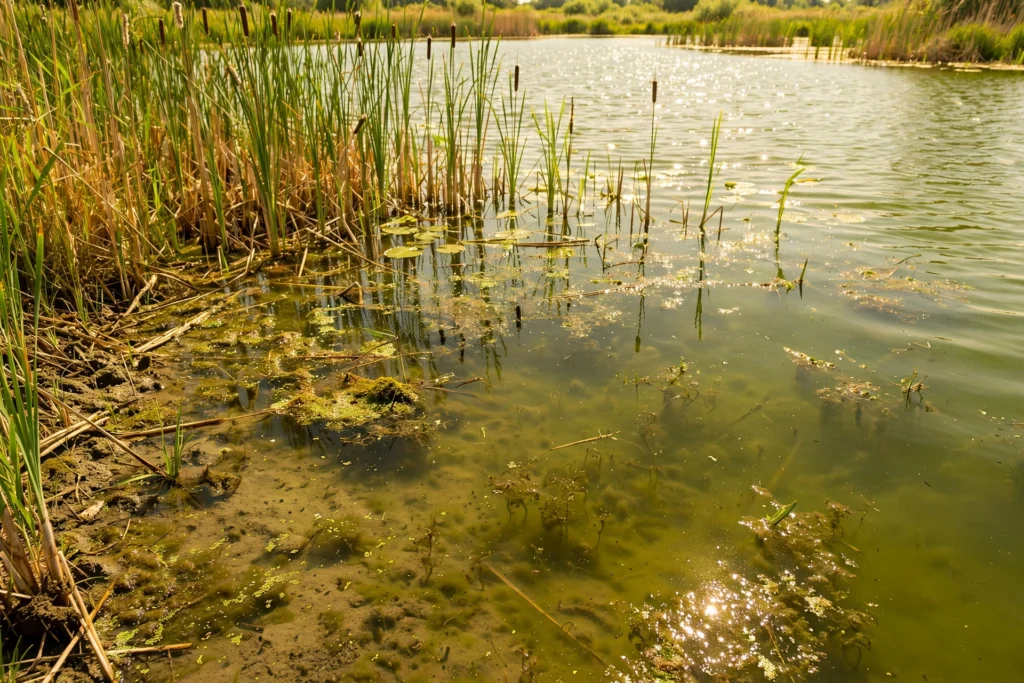
N. fowleri lives in warm freshwater and soil around the world. In the United States, the classic risk settings include:
- Lakes, ponds, and slow-moving rivers during summer
- Hot springs and thermal waters (the CDC advises always keeping your head above water in hot springs)
- Warm, shallow water where sediment is easily stirred up — the amoeba is more likely to live in sediment
- Poorly maintained swimming pools, splash pads, and other recreational venues with inadequate chlorine
- Occasionally, warm tap water in southern states — a reason behind the distilled-water rule for nasal rinsing
Infections “almost always” occur from July to September, tracking the hottest part of the year. Long hot spells produce higher water temperatures and lower water levels — the exact conditions in which the amoeba multiplies most aggressively.
Prevention: How to Protect Yourself
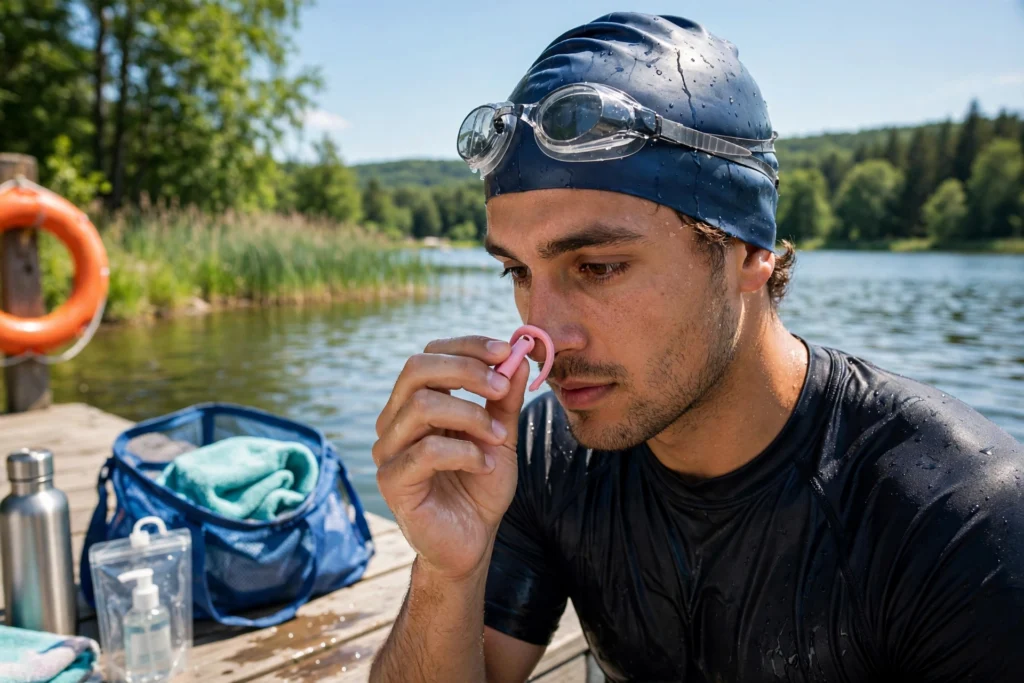
The good news is that prevention is simple, cheap, and effective. The CDC and state health departments recommend these steps whenever you are in warm freshwater:
- Hold your nose or wear a nose clip when jumping or diving into fresh water.
- Avoid stirring up sediment — do not dig in or disturb shallow, warm water.
- Keep your head above water in hot springs and thermal waters.
- Avoid jumping or diving in warm freshwater during periods of high water temperatures and low water levels.
- Use only distilled or boiled tap water when rinsing your sinuses or cleansing your nasal passages (neti pots, squeeze bottles).
- Check pool maintenance — the amoeba is moderately sensitive to chlorine, so properly chlorinated pools are safe; be cautious with poorly maintained pools and splash pads.
None of these steps requires giving up swimming. Millions of Americans swim in lakes and rivers every summer without incident. The goal is simply to keep water out of the nose — the one and only doorway this organism can use.
Frequently Asked Questions
Can you get the brain-eating amoeba from a swimming pool?
Not from a properly maintained, chlorinated pool — Naegleria fowleri is moderately sensitive to chlorine and cannot survive in it. The risk comes from poorly maintained pools, splash pads, and recreational venues with inadequate chlorine, as well as warm lakes, rivers, and hot springs. If a pool smells wrong, looks cloudy, or is clearly not maintained, stay out of it.
Can the brain-eating amoeba spread from person to person?
No. The CDC is explicit: you cannot get a Naegleria fowleri infection from another person, and you cannot pass it to others. Infection requires contaminated water to enter your own nose directly.
Can drinking lake water give you the infection?
No. Swallowing water containing the amoeba does not cause illness — the organism must enter through the nose to reach the brain. That said, drinking untreated lake or river water can expose you to plenty of other germs, so it is still not advisable.
How quickly do brain eating amoeba symptoms appear?
Symptoms typically begin about 5 days after exposure, though they can start anywhere from 1 to 12 days afterward (some sources cite up to 15 days). Once symptoms begin, the disease progresses rapidly — death usually occurs within 5 days of symptom onset.
Is there a test for Naegleria fowleri?
Yes, but it is specialized. Diagnosis uses laboratory tests on cerebrospinal fluid (CSF) obtained by spinal tap, and those tests are available in only a few labs in the United States, including the CDC. Brain imaging is often normal early in the disease, so doctors must specifically suspect PAM to order the right tests — which is why telling your provider about recent freshwater exposure is critical.
Has anyone ever survived a brain-eating amoeba infection?
Yes, but it is extraordinarily rare. With a fatality rate above 97%, only a handful of patients worldwide have been documented as survivors. Every survivor was diagnosed early and treated aggressively with antimicrobial drugs and intensive management of brain swelling.
Is the brain-eating amoeba becoming more common?
The infection remains extremely rare — only 167 US cases were reported between 1962 and 2024, and typically fewer than 10 people are diagnosed each year. However, scientists have noted that cases occasionally appear further north than the traditional southern-US range, which some researchers link to warming water temperatures. Vigilance during hot months is the practical takeaway.
Conclusion: Rare, But Worth Knowing About
The brain-eating amoeba is one of those threats that sounds like a horror movie but behaves like a footnote: millions of people swim in warm freshwater every year, and only a handful ever develop an infection. The 2026 deaths in North Carolina and Louisiana are tragedies, not a trend — but they are also a timely reminder of how simple the defenses are.
Remember the essentials: the danger enters only through the nose, the early brain eating amoeba symptoms are severe headache, fever, nausea, and vomiting starting days after freshwater exposure, and speed is everything — get medical help immediately and mention the water. A nose clip costs almost nothing. Knowing the symptoms could cost nothing and save everything.
Sources: CDC — Naegleria fowleri Infections; USA Today — North Carolina teen’s infection linked to water feature (Sept. 16, 2026); Citizen Times — Likely source of NC brain-eating amoeba determined (Sept. 16, 2026)