

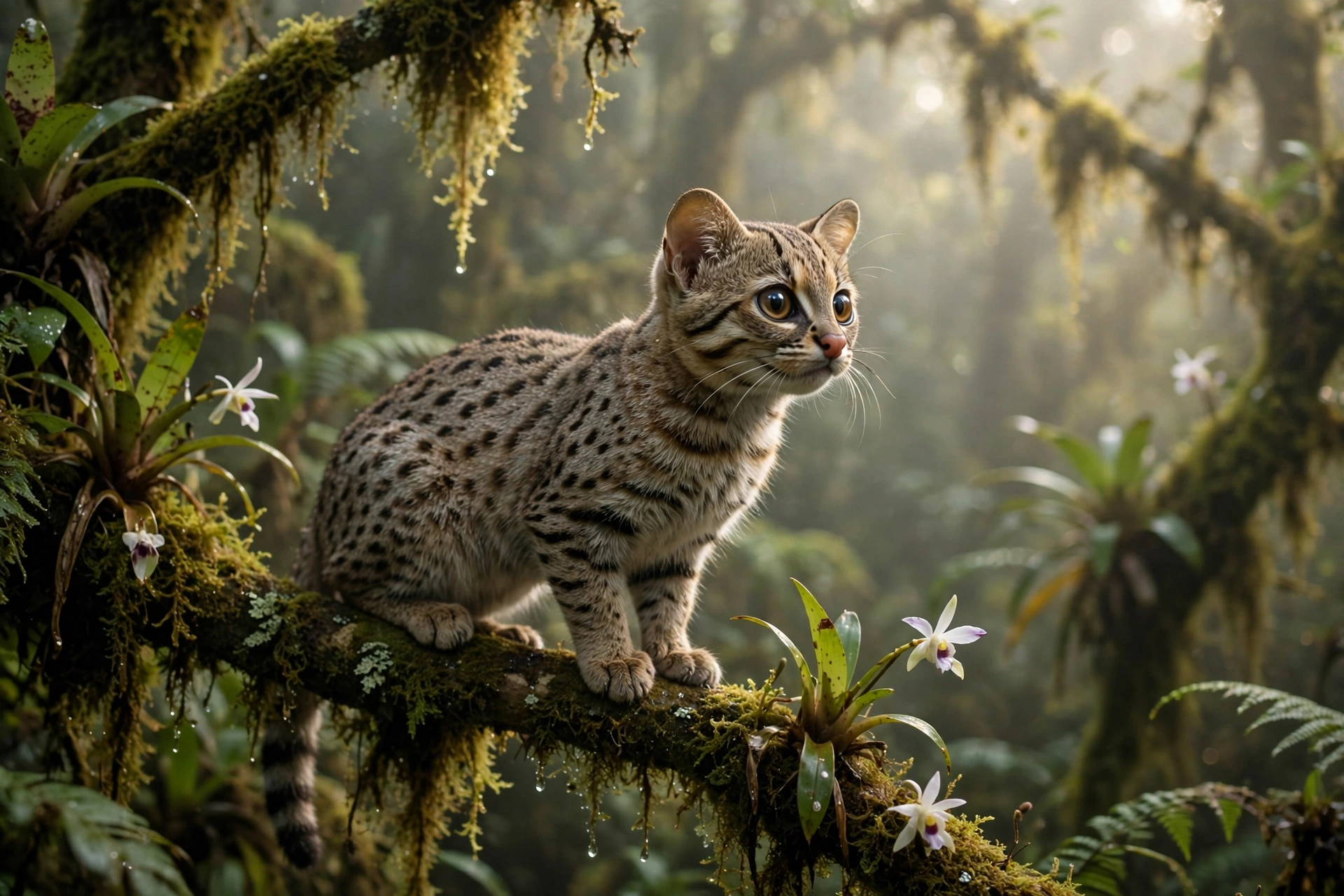
In a discovery scientists are calling a once-in-a-century event, researchers have officially identified a new tiger cat species living in the cloud forests of Bolivia. Named the tilcayo (Leopardus tilcayo), this tiny spotted wild cat is the first new cat species to be scientifically described in over 100 years — and the story of how it was found is as remarkable as the animal itself.
The announcement, published in the journal Current Biology, has electrified wildlife lovers and conservationists around the world. The tilcayo — smaller than an ordinary house cat, with teddy-bear-rounded ears and a beautifully spotted coat — had been sitting in a wildlife sanctuary in Bolivia for years before advanced DNA analysis revealed it was something science had never named.
In this complete guide, we break down everything we know about the new tiger cat species: how it was discovered, where it lives, how it differs from other tiger cats, why the discovery matters, and what it means for conservation in South America.
Key Facts About the New Tiger Cat Species
- Scientific name: Leopardus tilcayo
- Common name: Tilcayo (a tiger cat)
- Discovered: 2026, described in the journal Current Biology
- Found in: Yungas cloud forest, Bolivia (Andes–Amazon interface)
- Size: 42–50 cm head-to-body length, 1.5–2 kg — smaller than a house cat
- Significance: First new cat species named in over a century
- Conservation status: Not yet individually assessed; relatives are listed as Vulnerable
What Is the Tilcayo?
The tilcayo is a small wild feline belonging to a group of South American cats known as tiger cats. Do not let the name confuse you — tiger cats are not close relatives of tigers at all. They are petite, spotted cats of the genus Leopardus, all smaller than the average domestic house cat, living secretive lives in the jungles and grasslands of South America.
What makes the tilcayo special is that it is genetically distinct from every other known tiger cat. According to the research team, the tilcayo’s lineage separated from other tiger cat lineages around 1.4 million years ago — an evolutionary distance the scientists compare to the gap between modern lions and extinct cave lions. That depth of divergence is what convinced researchers they were looking at a genuinely new species, not just a regional variant.
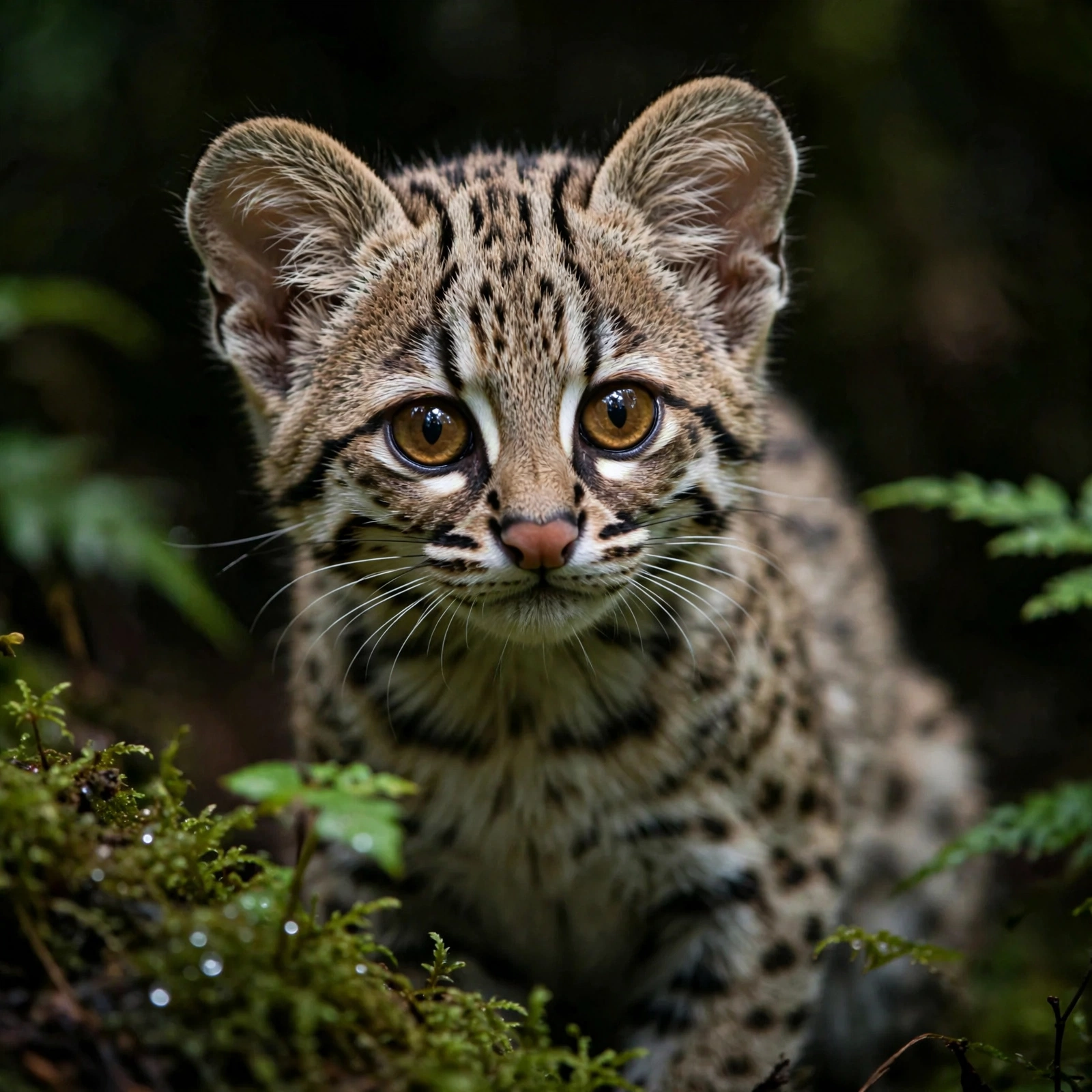
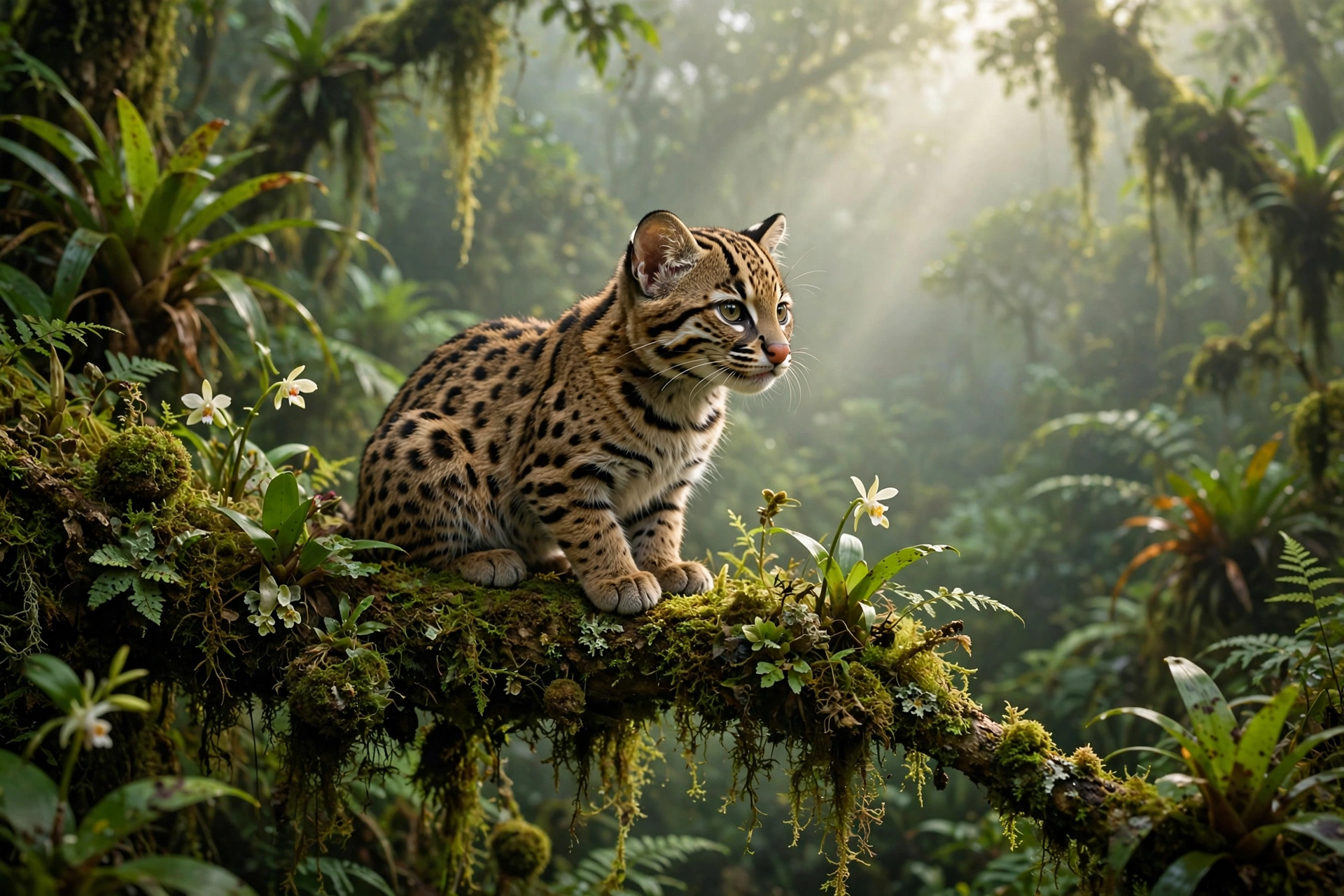
Visually, the tilcayo is a beautiful animal. It has larger spot markings and more muted fur colouring than its close relative the oncilla (the northern tiger cat), along with a larger, more slender tail. Those who have seen it up close describe an exceptionally charming creature: smaller than a domestic cat, with remarkably rounded ears “like a teddy bear” and large, expressive eyes.
How Scientists Discovered the New Tiger Cat Species
The discovery of the new tiger cat species began not deep in uncharted wilderness, but at a wildlife sanctuary — and with a curious researcher who noticed something did not quite add up.
National Geographic Explorer Paola Nogales Ascarrunz first encountered the cat that would change feline taxonomy while volunteering at the Senda Verde Wildlife Sanctuary in Bolivia. The cat, later named Tilcayo, had arrived at the sanctuary after being kept as a pet by a local family. Because the animal was semi-domesticated, it could not be returned to the wild — so it stayed at the sanctuary, where Nogales Ascarrunz began observing it closely.
Something about the cat nagged at her. Its characteristics did not match the published descriptions of tiger cats — descriptions based mostly on Brazilian specimens. As she put it, the team began to wonder: what tiger cat do we actually have in Bolivia?
To answer that question, an international team of researchers launched a sweeping genetic investigation. They analyzed DNA from 38 cats sampled across several South American countries — including eight museum specimens — comparing complete genomes across the Leopardus genus. Modern genomics can reveal differences that photographs and field notes completely miss, and the results were stunning.
The analysis showed that South America’s tiger cats are not one or two species, as long assumed, but at least five genetically distinct species. And the Bolivian cat from Senda Verde? It matched none of them. As lead study author Jonas Lescroart, an evolutionary ecologist at the University of Antwerp in Belgium, explained, nobody had ever proposed the Bolivian tiger cat as a different animal, subspecies, or otherwise. It was new to science entirely.
The findings were formally published in Current Biology, making the tilcayo (Leopardus tilcayo) the first living cat species to be discovered and newly named in over a century.
Five Tiger Cat Species: What the Research Really Revealed
The tilcayo was the headline, but the study redrew the entire tiger cat family tree. For decades, tiger cats across South America were thought to be a single species because they look so similar. The new genomic research proved otherwise.
Tiger cats are what biologists call cryptic species — animals that are morphologically very similar and nearly impossible to tell apart by appearance alone, yet genetically distinct. Even experts can be fooled: one museum specimen included in the study had originally been classified as a margay (another small spotted cat) before closer examination of the direction of its nape hairs suggested it was a tiger cat.
The study confirmed at least five distinct tiger cat species across South America, shaped by the continent’s formidable geographic barriers — the Andes mountains, great rivers, and vast forests that isolate animal populations for millions of years, allowing them to evolve separately. The researchers note that South America’s geography is so effective at splitting populations that more cat species may still be waiting to be found.
Intriguingly, the study also hints that the margay — long assumed to be a single species ranging from Mexico to Argentina — may actually be four distinct species. A more focused genetic study will be needed to confirm that claim, but it suggests the era of discovery in small South American cats is far from over.
Where Does the Tilcayo Live?
The tilcayo comes from one of the most magical — and most threatened — landscapes on Earth: the Yungas cloud forest of Bolivia, a lush, mist-draped forest belt where the Andes mountains meet the Amazon basin.
Cloud forests are among the most biodiverse ecosystems on the planet, perpetually bathed in mist and home to extraordinary concentrations of endemic species — plants and animals found nowhere else. The Yungas region sits at the Andes–Amazon interface, a transition zone where mountain and rainforest species mingle, creating an evolutionary hotspot.
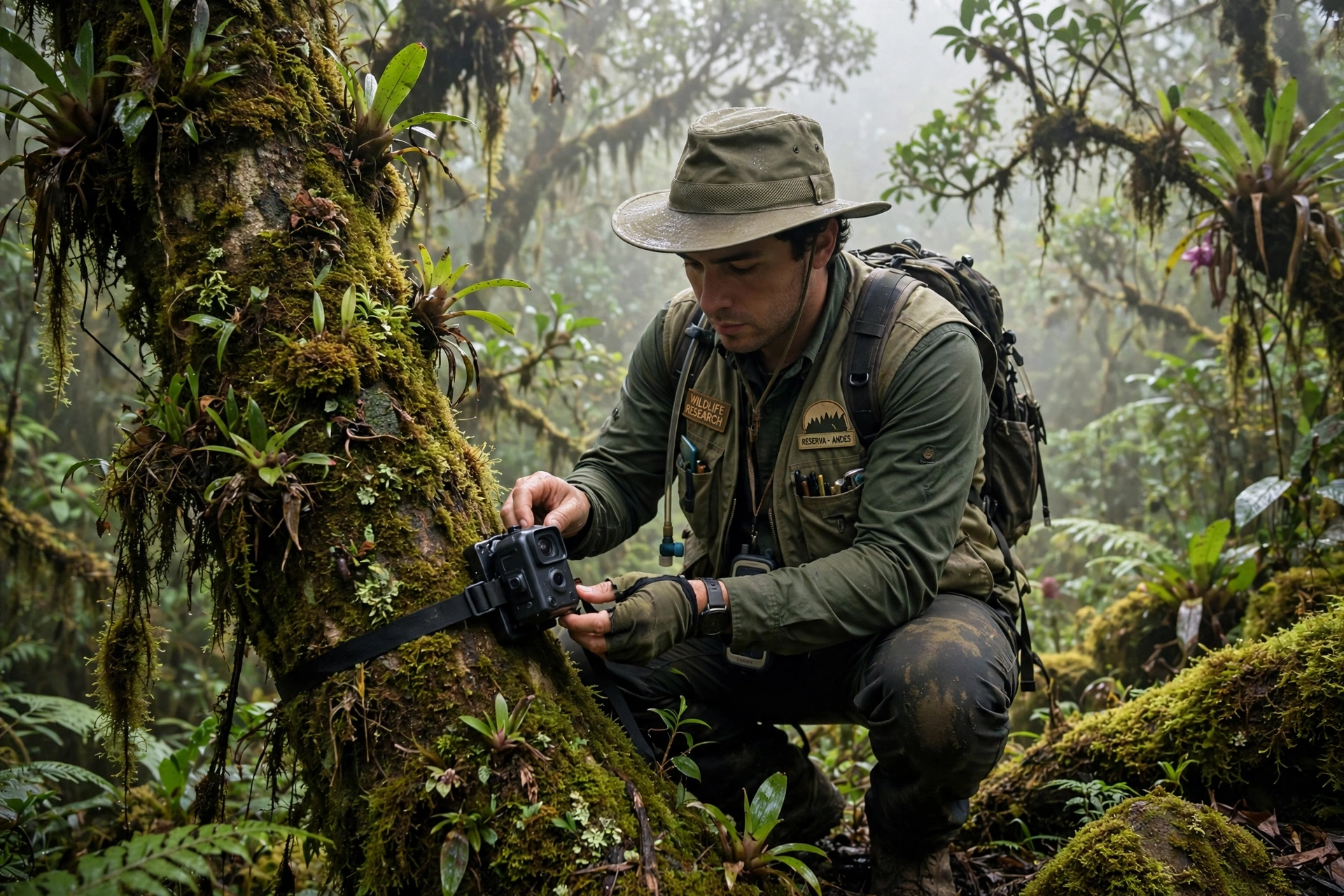
Very little is known about the tilcayo’s exact range or how many individuals exist. The only confirmed individuals are the cats studied at Senda Verde and the museum specimens re-analyzed in the research. To find out more, the research team is installing camera traps throughout the Yungas forest, hoping to document the species in the wild and estimate its distribution and population.

The Peru Discovery: A New Tiger Cat Subspecies Too
The tilcayo was not the study’s only taxonomic surprise. The same genomic analysis identified a distinct group of cats in Peru’s Yungas forests, on the western side of the Andes, which the researchers describe as a novel subspecies: Leopardus tigrinus antisuyo.
The subspecies is named after Antisuyu, the region of the old Inca Empire that included the area it inhabits — a nod to the deep human history of the landscape these cats have prowled for millennia. Like the tilcayo’s home, the Peruvian Yungas is a sensitive ecosystem facing mounting pressures from deforestation, agricultural expansion, human-caused fires, and mining.
Why the Tilcayo Discovery Matters
New mammal species are described by scientists every year — but almost all of them are “splits,” cases where an existing species is divided into two. The discovery of a genuinely novel species, never before proposed or suspected, is far rarer. For cats specifically, nothing like it has happened in over a hundred years.
The discovery matters for several reasons:
- It rewrites feline taxonomy. The finding “profoundly changes how small cat specialists group small cat species,” in the words of independent experts — a fundamental reorganization of an entire branch of the cat family tree.
- It honors indigenous knowledge. Local Bolivian communities had long known this cat and called it tilcayo — their term for cats. Rather than imposing a new name, the researchers preserved the traditional name in the scientific designation Leopardus tilcayo, recognizing the knowledge of the people who knew the animal first.
- It highlights how much remains unknown. If a new cat species could hide in a wildlife sanctuary in the 2020s, what else is out there? The discovery is a powerful reminder that Earth’s biodiversity is still being mapped.
- It creates urgency for conservation. You cannot protect what you do not know exists. Now that the tilcayo is recognized, conservationists can assess its threats and fight for its habitat with a name and a face.
Conservation Status: Is the Tilcayo Endangered?
Here is the sobering part of the story. The tilcayo’s population size is completely unknown, and its cloud-forest home is under severe pressure.
The International Union for Conservation of Nature (IUCN) Red List currently treats tiger cats as just two species — Leopardus tigrinus and the southern tiger cat (Leopardus guttulus) — both listed as Vulnerable with declining populations. The researchers have shared their findings with the IUCN, whose forthcoming review will assess the five tiger cat lineages separately for the first time.
That reassessment could dramatically change the picture. When a “vulnerable” population turns out to be five separate species, each with a smaller range and fewer individuals, some of those species may qualify as Endangered. Scientists caution there may be few tilcayo individuals left — and the threats are intensifying: deforestation, agricultural expansion, human-caused fires, and mining are all eating into the Yungas.
The hope is that the tilcayo — charismatic, tiny, and utterly charming — becomes a flagship for cloud-forest conservation, rallying protection for an entire ecosystem before it is too late.
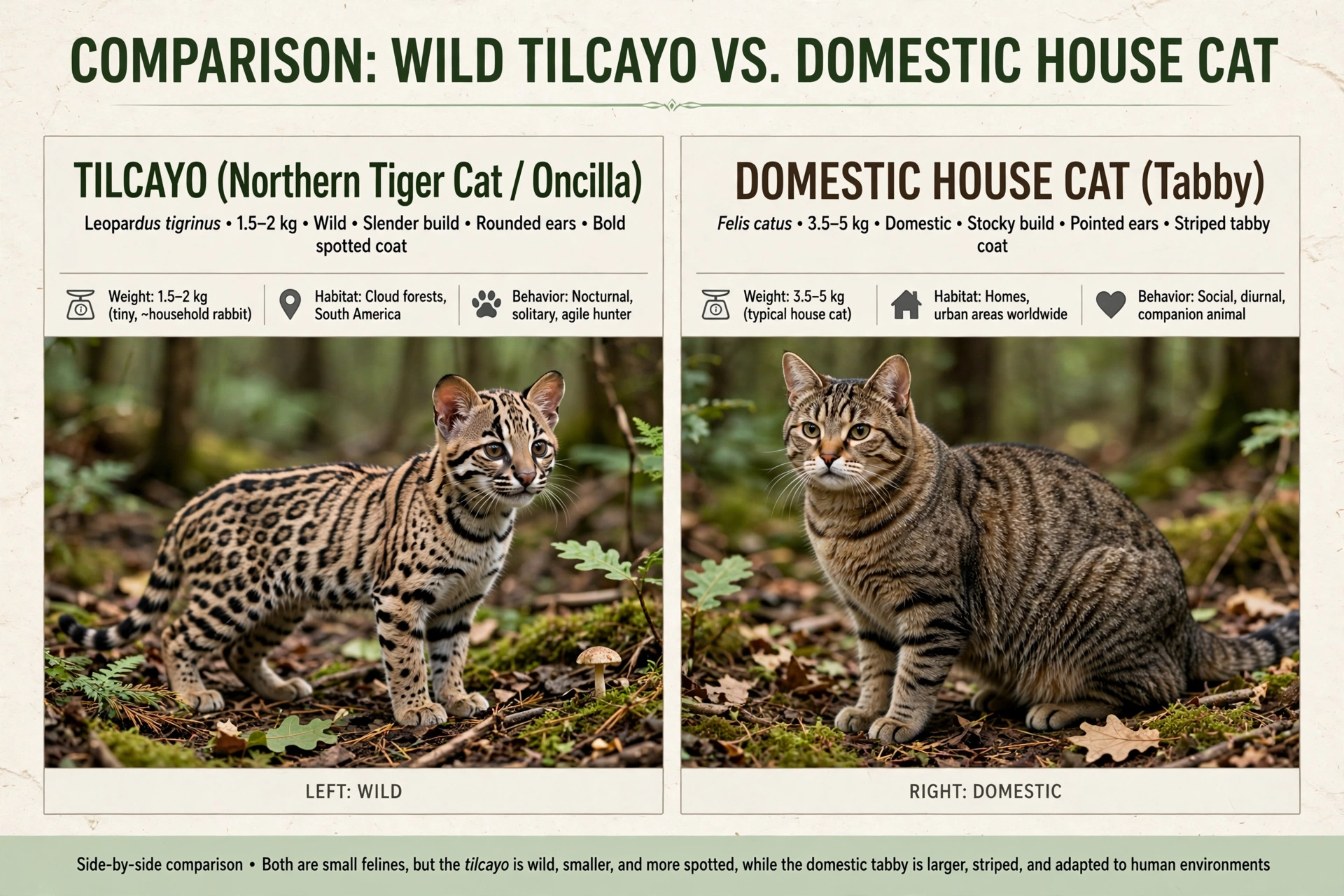
Tiger Cat vs Domestic Cat: Key Differences
Wondering how the new tiger cat species compares to the cat sleeping on your sofa? Here are the key differences:
- Size: The tilcayo measures 42–50 cm in head-and-body length and weighs just 1.5–2 kg — noticeably smaller and more slender than most domestic cats.
- Coat: Wild, bold spot markings with muted fur tones, evolved for camouflage in dappled forest light — very different from a tabby’s stripes.
- Ears: Distinctively rounded ears, described as teddy-bear-like.
- Tail: Larger and more slender than that of its close relative, the oncilla.
- Behavior: Tiger cats are among the shyest, most cryptic wild animals — elusive, nocturnal, and exceptionally good at remaining out of sight. Even remote trail cameras often fail to capture enough detail to identify them.
- Status: A wild species (never domesticated), while your house cat is Felis catus, domesticated thousands of years ago.
What Happens Next for the Tilcayo?
The scientific naming is just the beginning. The research team’s immediate priority is finding out how many tilcayos exist and where exactly they roam. The planned camera-trap surveys across the Bolivian Yungas should reveal whether the species has a healthy wild population or is already in trouble.
Meanwhile, the IUCN’s upcoming reassessment will determine the tilcayo’s official conservation status — a critical step for unlocking funding and legal protection. Conservation organizations are also watching closely: a newly described, photogenic species is exactly the kind of flagship that can drive habitat protection.
For the individual cat that started it all — Tilcayo of Senda Verde Wildlife Sanctuary — life continues in protective care, now as the most famous representative of his species: the living ambassador of a discovery a century in the making.
Frequently Asked Questions About the New Tiger Cat Species
What is the tilcayo?
The tilcayo (Leopardus tilcayo) is a newly identified species of tiger cat — a small spotted wild feline native to Bolivia’s Yungas cloud forest. It is the first new cat species to be scientifically named in over 100 years.
Where was the new tiger cat species discovered?
The species was identified from Bolivia’s Yungas cloud forest region, at the Andes–Amazon interface. The key individual, a cat named Tilcayo, was living at the Senda Verde Wildlife Sanctuary in Bolivia after being kept as a pet by a local family.
How big is the tilcayo compared to a house cat?
The tilcayo is smaller than a domestic house cat, with a head-and-body length of 42–50 cm and a weight of just 1.5–2 kg. It has a slender build, rounded teddy-bear-like ears, and distinctive large spot markings.
Why is the tilcayo discovery so important?
It is the first genuinely new cat species described in over a century, it rewrites the taxonomy of South America’s tiger cats (revealing five species instead of one), and it highlights how much biodiversity remains undiscovered — while creating urgency to protect the threatened Yungas cloud forest.
Is the tilcayo endangered?
Its exact status is not yet assessed. The IUCN currently lists its close relatives as Vulnerable with declining populations, and a forthcoming review will evaluate the five tiger cat species separately — the tilcayo could potentially be classified as endangered given its likely small range and habitat threats.
How many tiger cat species are there now?
Genomic research published in 2026 confirmed at least five genetically distinct tiger cat species across South America, where scientists previously recognized only one or two. The study also described a new subspecies in Peru, Leopardus tigrinus antisuyo.
Conclusion
The discovery of the new tiger cat species — the tilcayo — is a powerful reminder that the age of exploration is not over. In an era of satellites and smartphones, a tiny spotted cat sat in a Bolivian sanctuary, unknown to science, until curiosity and cutting-edge genomics revealed the truth.
As camera traps go up across the misty Yungas and conservationists rally around this charismatic newcomer, the tilcayo’s story is just beginning. For wildlife lovers, it is a moment of pure wonder: proof that our planet still holds secrets — and that protecting wild places is the only way to keep them.
Stay tuned to Events Day for more stories on wildlife, nature awareness days, and the events shaping our natural world.
More from Events Day
- Constitution Day 2026: History, Date & Celebrations
- National Cheeseburger Day 2026: Best Deals & Free Burgers
Sources: National Geographic; CNN