

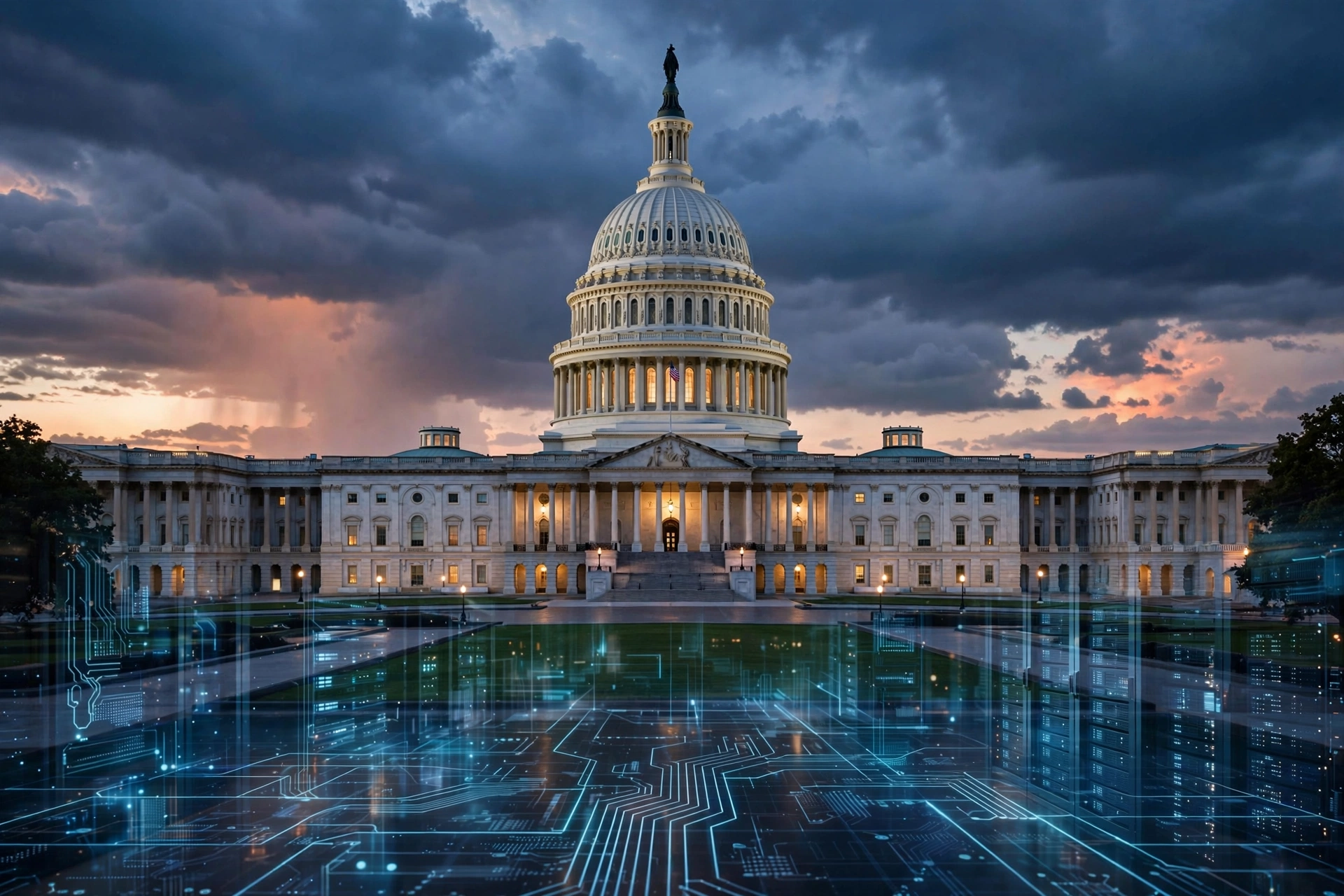
- What happened: The U.S. Senate blocked the Ratepayer Protection Act on Thursday, September 17, 2026, after Sen. Martin Heinrich (D-NM) objected to a unanimous-consent request to pass it.
- The bill: The senate data center bill would have required state regulators to consider standards making new data centers and hyperscalers consuming over 100 megawatts cover the costs of new power generation, transmission, and grid upgrades.
- The vote trail: The House passed the same bill Wednesday evening by an overwhelming 417-3 vote.
- Why it stalled: Heinrich said the bill “falls short” and pushed his own alternative, the GRID Savings Act, which would more directly require large-load users to pay for grid upgrades.
- What’s next: The fight now moves to whether Congress passes a stronger measure — or whether states keep filling the gap on their own.
The Senate blocked a data center bill this week that was supposed to shield American households from rising electricity costs driven by the artificial-intelligence boom. On Thursday, September 17, 2026, a single objection on the Senate floor stopped the Ratepayer Protection Act — one day after it sailed through the House with near-unanimous support. If you have been wondering why your electricity bill keeps climbing, this is the story to understand. This guide explains what the senate data center bill would have done, why it was blocked, who the key players are, and what happens next for your wallet.
What Happened on the Senate Floor
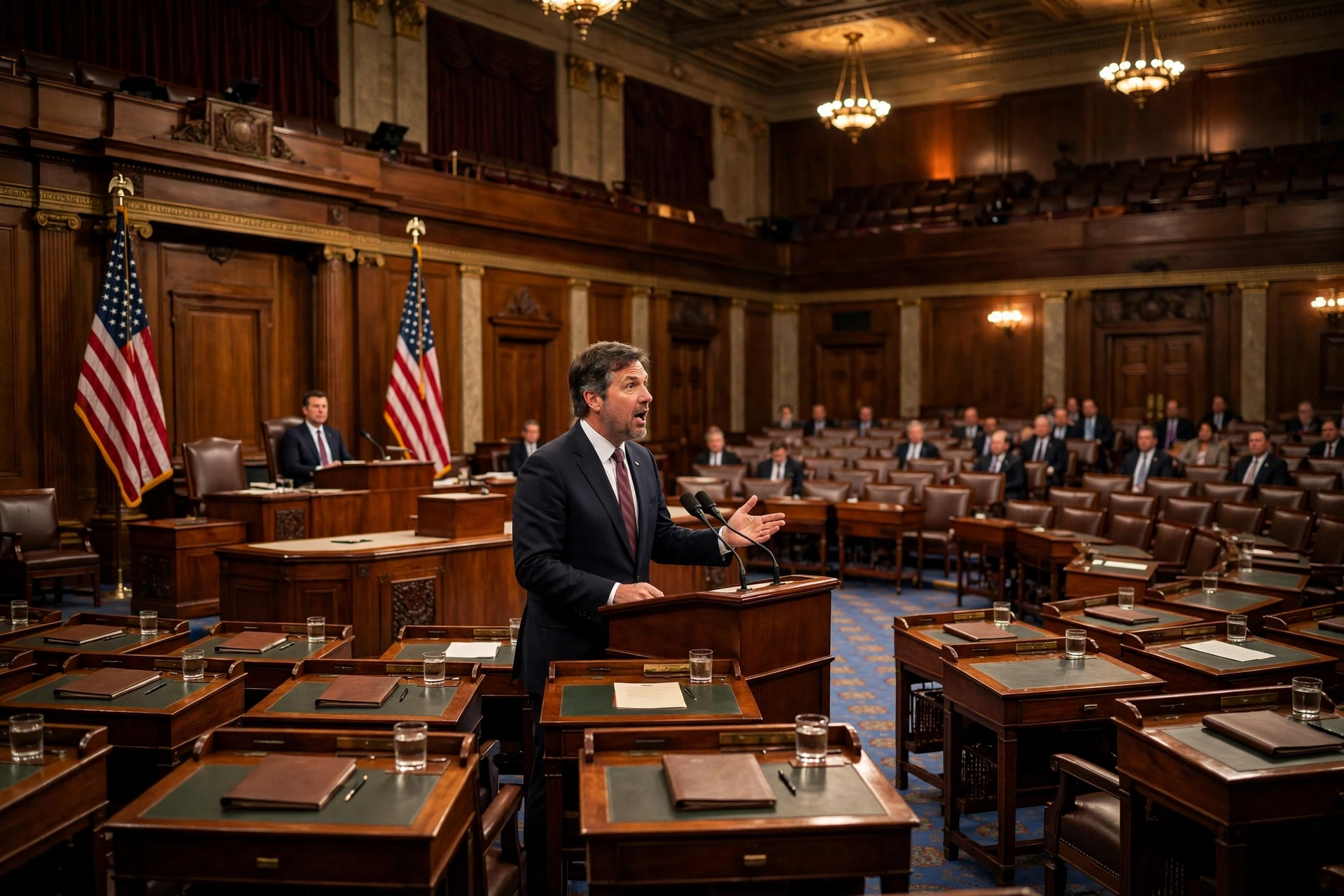
Sen. Jon Husted (R-OH) asked the Senate to pass the Ratepayer Protection Act by unanimous consent — a fast-track procedure that lets a measure go through without a roll-call vote, as long as no senator objects. Sen. Martin Heinrich (D-NM), the ranking member of the Senate Energy and Natural Resources Committee, stood up and objected, killing the fast-track attempt on the spot. That is the entire Senate blocking the data center bill: one objection, and the legislation could not move by that route.
The drama did not end there. Heinrich argued that the bill does not go far enough and countered by asking the Senate to approve his legislation — the GRID Savings Act — by unanimous consent instead. Sen. Bernie Moreno (R-OH), the other Ohio senator, promptly objected to Heinrich’s request, criticizing him for blocking the House-passed bill, which Moreno said could have delivered “immediate relief” to consumers. In a matter of minutes, both sides had blocked each other’s proposals, and the data center electricity fight moved into a full partisan stalemate.
The timing is striking. The Ratepayer Protection Act had passed the House on Wednesday evening, September 16, by a 417-3 vote — an almost unheard-of margin in today’s Congress. Bipartisan bills that win by that margin in one chamber usually glide through the other. This one did not.
What Is the Ratepayer Protection Act?
The Ratepayer Protection Act is the centerpiece of this week’s senate data center bill fight. Here is what it would actually do:
- Require state regulators to consider new cost standards for data centers and hyperscalers — the giant computing campuses that power AI services — so these facilities cover the costs of the new generation, transmission, and infrastructure upgrades they make necessary.
- Apply to large consumers: the bill focuses on new data centers and hyperscalers that consume over 100 megawatts of electricity — facilities large enough to require major grid build-out in the communities around them.
- Stop cost-shifting to households: the core idea is that when a hyperscaler needs expensive new power plants and transmission lines, the company should pay for them — not ordinary families and small businesses through higher utility rates. As the bill’s House sponsor Rep. Gabe Evans (R-CO) put it: “there is a federal directive in there, which is ‘thou shall not pass on costs to consumers.'”
The bill was originally introduced in the House by Rep. Gabe Evans (R-CO) and co-sponsored by Rep. Kathy Castor (D-FL) — a bipartisan pair — and Husted introduced a companion bill in the Senate in July 2026.
Why Data Centers Are Driving the Electricity Debate
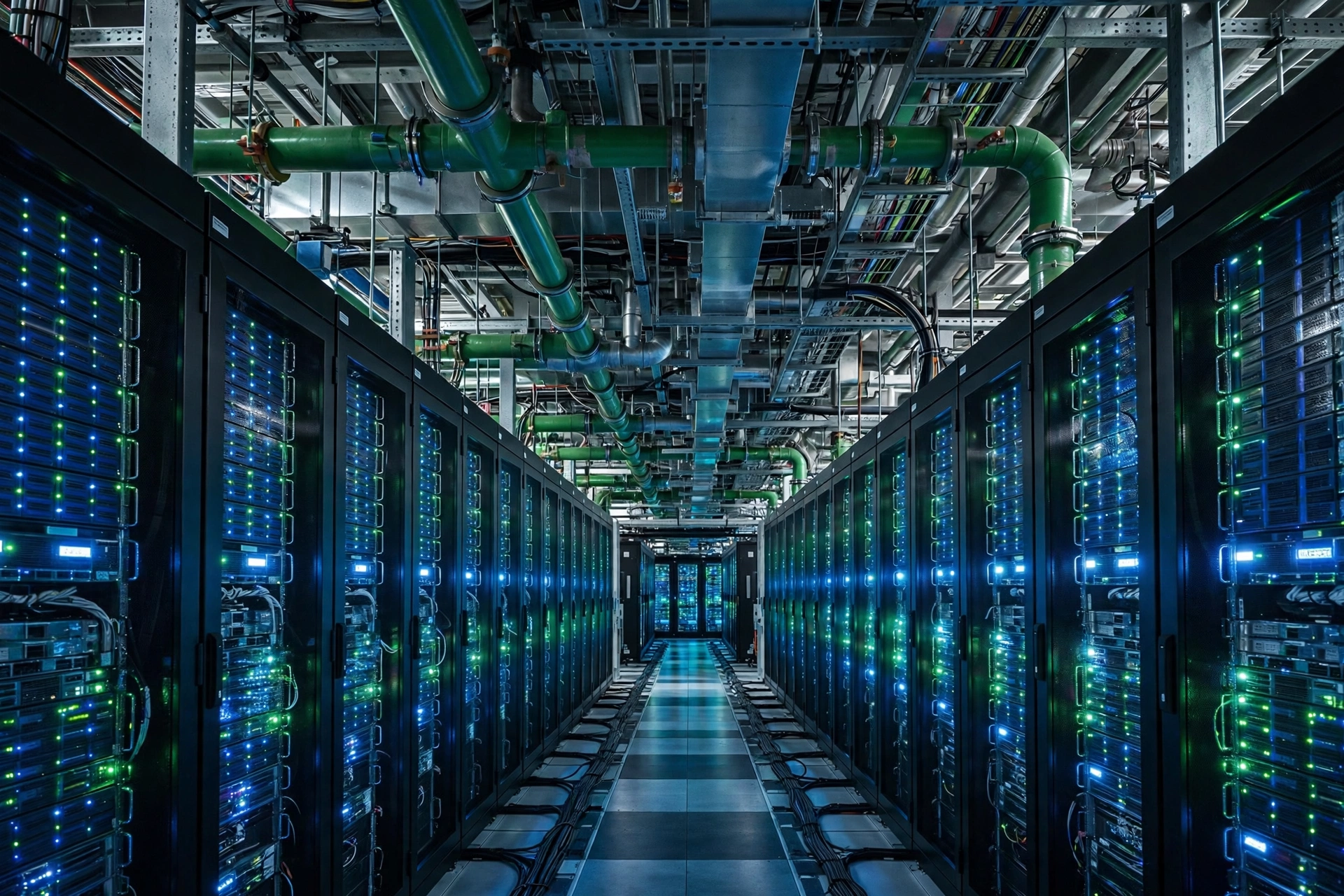
The fight over the senate data center bill did not come out of nowhere. The AI boom has triggered an unprecedented wave of data center construction across the United States. These campuses — some consuming as much power as entire towns — need massive amounts of electricity, water for cooling, and land. Utilities have warned that serving them requires billions of dollars in new power plants, substations, and transmission lines, and consumer advocates fear those costs are being baked into everyone’s rates.
That concern is the entire premise of the Ratepayer Protection Act: growth is fine, but the companies profiting from AI infrastructure should pay their own way on the grid rather than socializing the costs to ratepayers who never asked for a hyperscale neighbor.
Why Was the Bill Blocked?
Sen. Heinrich did not dispute the problem — he disputed the solution. “The senator from Ohio and I agree on one thing, AI data centers can mean higher costs for American families, and in a lot of places they already do,” Heinrich said on the Senate floor. But he called the Ratepayer Protection Act insufficient: “It’s not enough for us to tell states to consider making data centers pay for grid updates.”
Heinrich’s core argument was blunt: “If hyperscalers and other big tech developers need expensive new facilities and more energy, they should pay for it, not our hardworking families and small businesses.” In his view, the bill only asks state regulators to “consider” standards — it does not mandate that large-load users actually foot the bill.
Heinrich’s Alternative: The GRID Savings Act
Instead of Husted’s senate data center bill, Heinrich pointed to his own proposal, the GRID Savings Act, which he said “is what is needed to start to bring down energy prices.” Where the Ratepayer Protection Act tells states to consider cost-allocation standards, the GRID Savings Act would more directly require large-load users to pay for their grid upgrades.
Heinrich also laid out a broader vision: data center developers should work with communities throughout the planning process, protect local water supplies, reduce air pollution, and rely on clean energy and battery storage. “But we’re not going to get there with the bill that the senator from Ohio has proposed,” he said.
The Republican Response
Husted and Moreno framed the block as Democrats standing in the way of consumer relief. Moreno argued the House-passed bill could have delivered “immediate relief” to Americans facing higher utility bills — and that blocking it in the name of a stronger, hypothetical bill leaves families paying more in the meantime.
The philosophical split is a familiar one in Congress: pass the good-but-imperfect bill now, or hold out for the stronger bill that may never arrive. For now, the stronger bill does not have the votes, and the weaker version of the senate data center bill does not have the Senate floor.
What Is Unanimous Consent — and Why Does One Objection Stop a Bill?
If you are puzzled how a single senator can block a bill that passed the House 417-3, the answer is unanimous consent. It is a Senate procedure that lets legislation pass without debate or a roll-call vote — but only if every senator agrees. Any one member can object and stop it cold. Unanimous consent is typically used for noncontroversial measures, which is why its failure here was so telling: the senate data center bill, bipartisan in the House, turned out to be plenty controversial in the Senate.
Blocking by unanimous consent does not kill a bill permanently. The Senate could still take it up through the regular legislative process — committee markup, floor debate, cloture, and a roll-call vote. But regular order takes time, consumes scarce floor time, and requires 60 votes to overcome a filibuster. In a closely divided Senate with a packed calendar, a blocked unanimous-consent request often means a bill stalls indefinitely.
What Happens Next?
Several paths are open for the senate data center bill, and none is quick:
- Negotiation toward a compromise. Husted and Heinrich agree on the diagnosis — AI data centers can raise costs for families — but not the prescription. A merged bill that keeps the Ratepayer Protection Act’s framework while adding the GRID Savings Act’s stronger mandates could theoretically win 60 votes. Whether the politics allow it is another question.
- Regular order. Senate leadership could bring the bill to the floor the long way. That requires burning floor time and surviving a cloture vote — a heavy lift, but not impossible for a bill that passed the House 417-3.
- States keep acting alone. While Washington argues, states are moving. New York’s legislature recently passed what analysts call a first-in-the-nation data center package: a permitting moratorium for large data centers, mandatory environmental review and public hearings, and new utility rate classifications so large data centers pay for their own infrastructure costs, with full implementation targeted by June 1, 2030. Other states are weighing similar steps.
- Nothing happens — and utilities keep building. The status quo is not neutral. Every month without cost-allocation rules is a month in which utilities plan and build grid upgrades whose costs may end up in everyone’s rates.
How States Are Filling the Gap
The New York example deserves a closer look, because it shows what “stronger” legislation looks like in practice. According to legal analysis of the new law, New York’s act:
- Sets thresholds at 1 MW, 5 MW, and 20 MW of peak demand, with only the largest data centers (20 MW+) subject to a Department of Environmental Conservation permitting moratorium until one year after the law takes effect.
- Requires a statewide environmental impact report within 18 months, examining energy use, water consumption, land use, pollution, and impacts on disadvantaged communities.
- Mandates at least one in-person public hearing in host communities before future large data center approvals.
- Requires utilities to create separate service classifications for large data centers, assigning infrastructure upgrades, operational costs, and commodity-price increases attributable to those facilities to that class — not to other ratepayers.
This is essentially the GRID Savings Act philosophy at the state level: make the big users pay their own way. Whether Congress follows New York’s lead or keeps arguing will shape electricity bills for years.

What This Means for Your Household
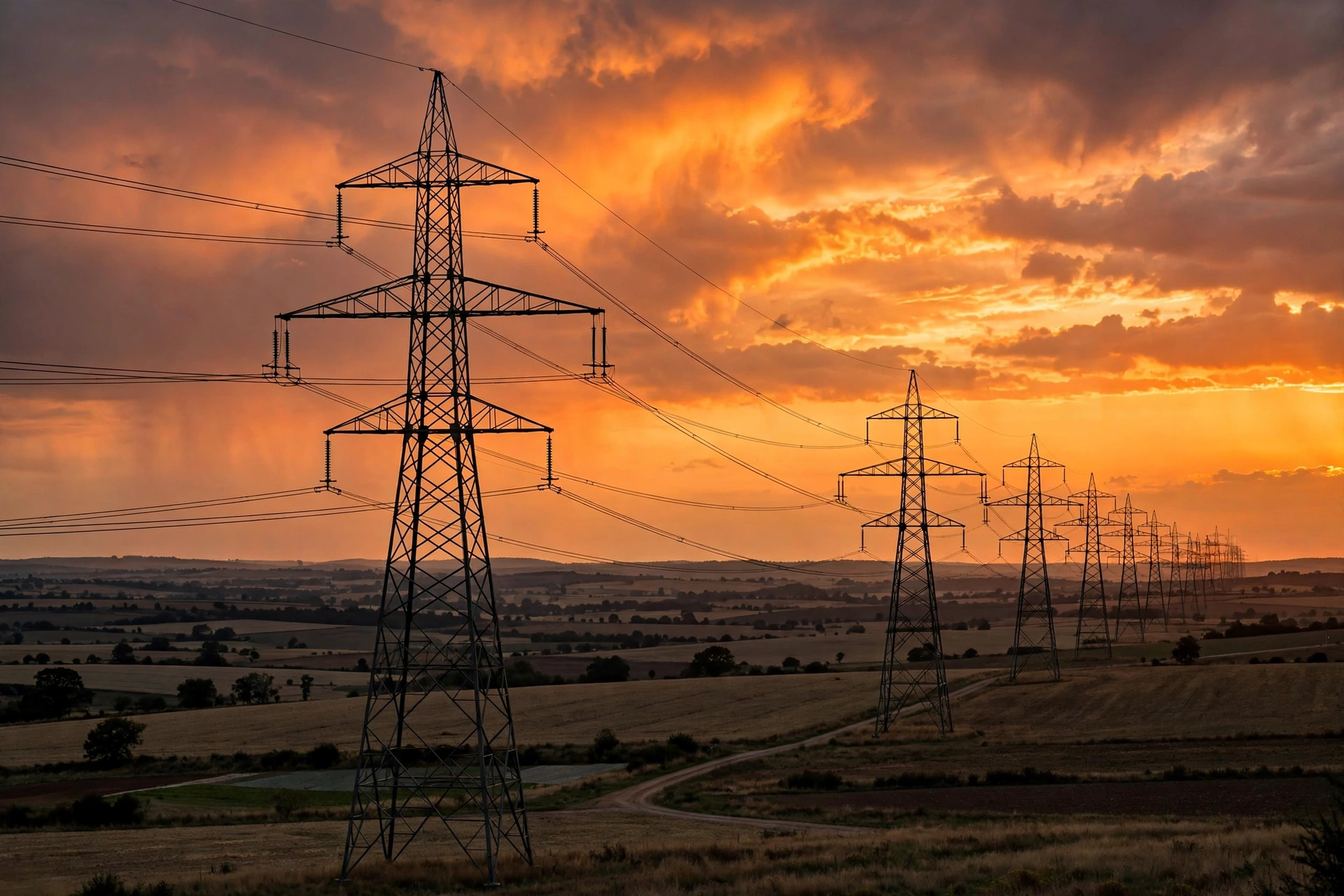
Strip away the Senate procedure and the bill numbers, and the question is simple: who pays for the power grid of the AI era? The Ratepayer Protection Act’s supporters say it should be the hyperscalers building the data centers. Sen. Heinrich says the bill does not guarantee that — and that a weaker bill might give the industry cover to keep passing costs through. Both sides claim to be protecting your wallet.
Practically speaking, here is what to watch:
- Your utility’s rate cases. If your state utility commission is approving new rates, check whether data center-driven infrastructure costs are in the mix — that is where cost-shifting shows up first.
- State legislation. States like New York are moving faster than Congress. Your state may already be debating its own data center rules.
- The next Senate move. Watch whether Husted and Heinrich negotiate a compromise, or whether the issue becomes campaign fodder for the midterms.
- Data center announcements near you. New campuses are being announced constantly; each one triggers local fights over water, noise, and — increasingly — who pays for the power lines.
Staying informed is the thread connecting these fights: just as coastal residents track official alerts such as a beach hazards statement to stay safe, households can track their utility commission’s filings to stay ahead of rate changes.
Frequently Asked Questions
What is the Ratepayer Protection Act?
The Ratepayer Protection Act is a federal bill that would require state regulators to consider standards making new data centers and hyperscalers that consume over 100 megawatts of electricity cover the costs of new power generation, transmission, and infrastructure upgrades they necessitate — instead of passing those costs to household utility customers. It passed the House 417-3 on September 16, 2026, but was blocked in the Senate the next day.
Why did the Senate block the data center bill?
Sen. Martin Heinrich (D-NM) objected to a unanimous-consent request to pass the bill, arguing it “falls short” because it only asks states to consider cost standards rather than mandating that large-load users pay. He pushed his own alternative, the GRID Savings Act, which would more directly require big electricity users to fund grid upgrades.
What is unanimous consent in the Senate?
Unanimous consent is a fast-track Senate procedure that lets legislation pass without debate or a roll-call vote — but only if no senator objects. A single objection stops it. The bill is not dead; it could still move through regular order, but that requires floor time and 60 votes to overcome a filibuster.
Do data centers really raise household electricity bills?
That is the central claim driving the debate. Hyperscale data centers consume enormous amounts of power, requiring utilities to build new generation and transmission. Consumer advocates and lawmakers on both sides — Husted and Heinrich included — agree these facilities can raise costs for families; they disagree on how to stop it. The precise impact varies by state and utility.
What is the GRID Savings Act?
The GRID Savings Act is Sen. Heinrich’s alternative proposal. Unlike the Ratepayer Protection Act, which tells states to consider cost-allocation standards, the GRID Savings Act would directly require large-load users like hyperscale data centers to pay for their grid upgrades, and Heinrich says it is what is needed to “start to bring down energy prices.”
Could the blocked data center bill still become law?
Yes — the senate data center bill could still become law, but the path is harder now. Options include negotiating a compromise between the Ratepayer Protection Act and the GRID Savings Act, or bringing the bill up through regular Senate order. Both require political will and floor time. Meanwhile, states like New York are passing their own data center laws.
What should I watch next on this story?
Watch for a negotiated compromise on the senate data center bill in the Senate, action in your state’s legislature or utility commission, and how utilities handle upcoming rate cases. The fight over who pays for AI-era grid upgrades is just beginning.

The Bottom Line
The Senate blocking the data center bill is one of those Washington moments that reveals more than it resolves. A bill that passed the House 417-3 died — at least for now — because one senator thought it was too weak and the other side thought it was the best relief available. Both claimed the mantle of protecting consumers. Meanwhile, the data centers keep getting built, the grid keeps getting upgraded, and the question of who pays hangs over every household electricity bill in America.
The AI era needs enormous amounts of power. That much is settled. What is not settled — and what this week’s fight over the senate data center bill was really about — is whether the companies building that future pay their fair share of the wires and power plants it requires, or whether the costs quietly land on the rest of us. Watch this space: the next round of this fight is coming, whether in Congress, in state capitals, or at your local utility commission.
More from Events Day
- Brain-Eating Amoeba: Symptoms, Risks & How to Stay Safe
- Tilcayo: New Tiger Cat Species Discovered
- Beach Hazards Statement: What It Means & How to Stay Safe
Sources: Washington Examiner; Internewscast; DLA Piper / JDSupra on New York’s data center act. Published September 18, 2026.