

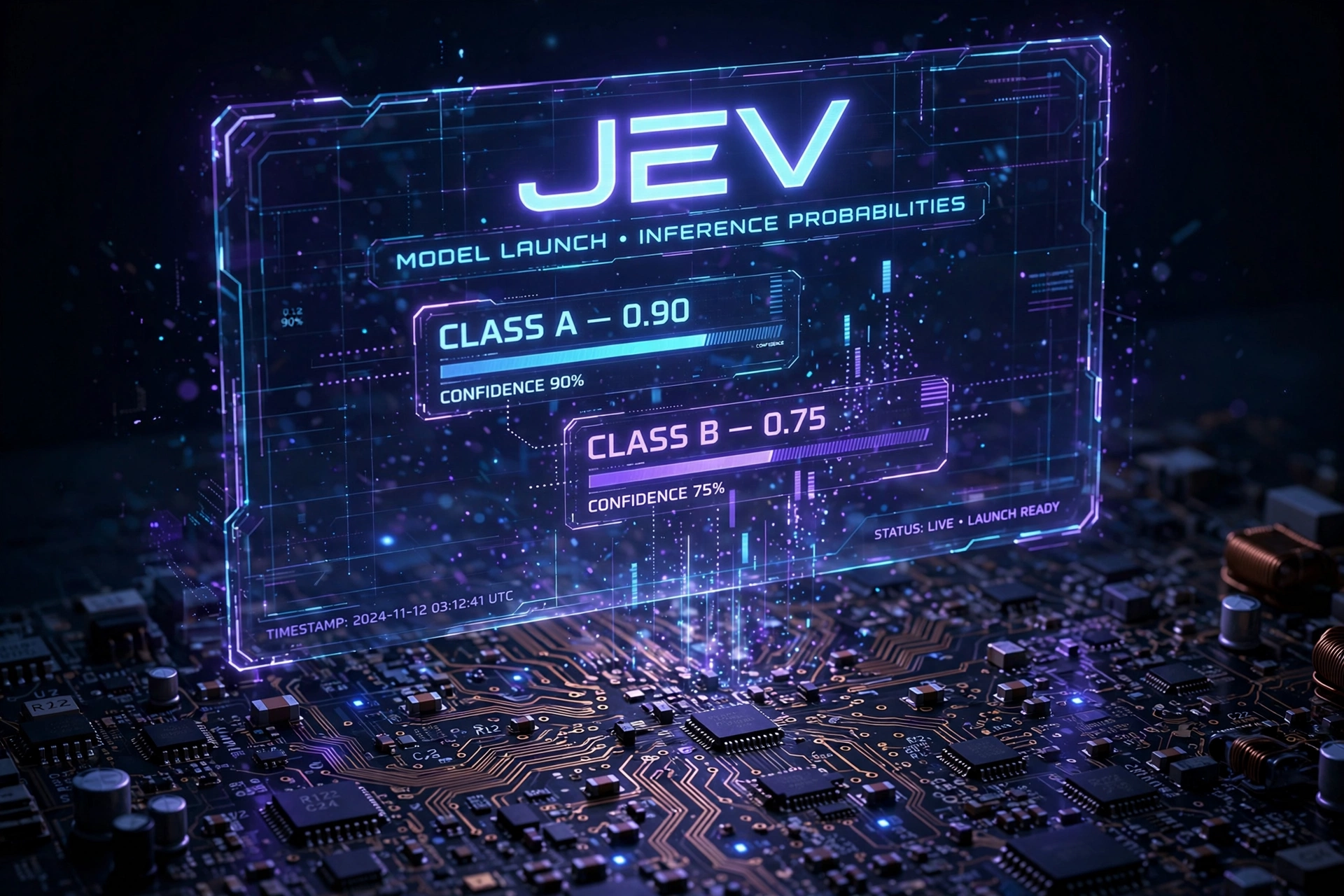
⚡ Key Facts: Jev AI Model Launch
- What: Jev — a new AI model that outputs probabilities (“calibrated decisions”) instead of text
- Who: TypeSafe AI, founded by ChatGPT inventor Diogo Almeida after two years in stealth
- When: Released September 18, 2026
- Key claims: 20–200x faster and 40–400x cheaper than frontier models, with zero hallucinations
- Best for: Software automation, classification, and model routing for developers
The Jev AI model might be the most unusual AI launch of 2026 — and it’s thrilling developers for exactly that reason. On September 18, 2026, TypeSafe AI emerged from two years of stealth to release a new kind of AI model built by one of the inventors of ChatGPT. Unlike every chatbot you’ve ever used, Jev doesn’t generate text at all. Instead, it produces probabilities — numbers between 0 and 1 that represent how likely something is.
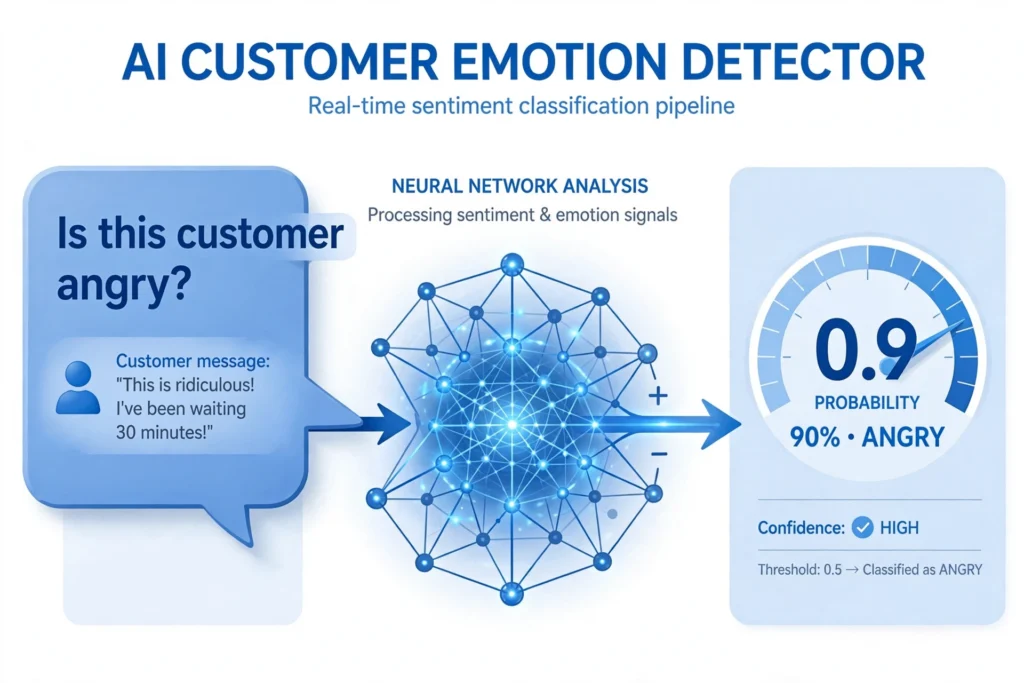
Ask it “Is this customer angry?” and it doesn’t write you a paragraph. It returns 0.9 — meaning there’s a 90% probability the answer is yes. That single design decision makes Jev up to 100 times faster and cheaper than comparable frontier models, and — the company’s boldest claim — it makes hallucination structurally impossible.
In this guide, we’ll break down exactly what the Jev AI model is, who built it, how it works, why developers are excited, and what it could mean for the future of artificial intelligence.

What Is the Jev AI Model?
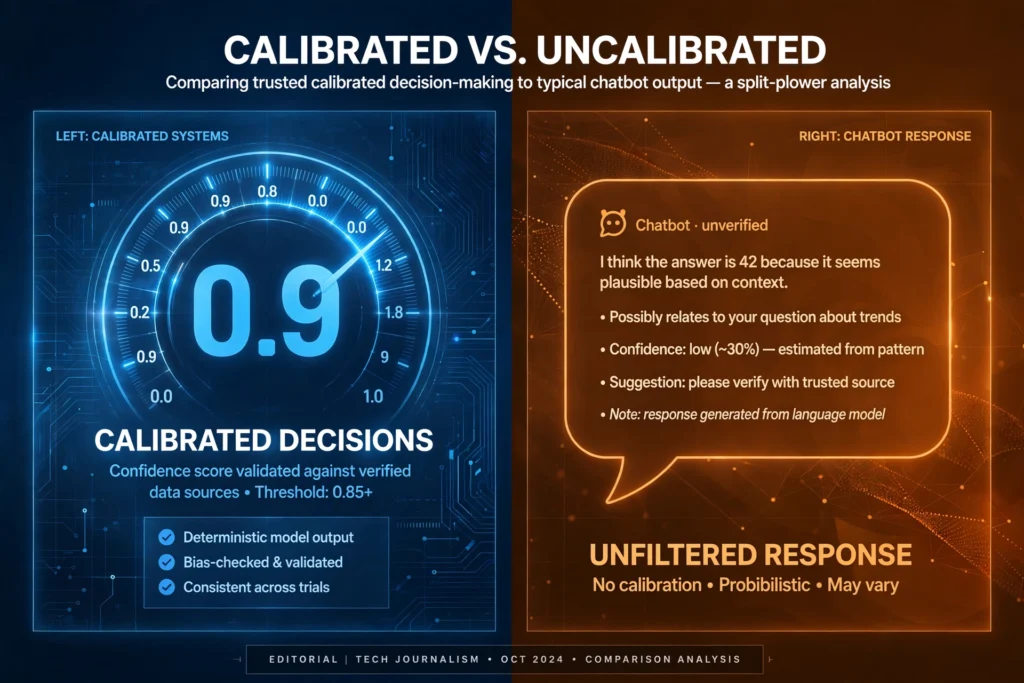
Jev is a new transformer-based foundation model released by TypeSafe AI on September 18, 2026. It is deliberately not a large language model (LLM). While ChatGPT, Gemini, and their rivals output language tokens — words, sentences, code — Jev outputs what TypeSafe calls “calibrated decisions”: probability scores and structured judgments.
Think of it as the difference between asking a person and asking a calculator. A chatbot gives you an essay-style answer that you then have to interpret. Jev gives you a number. For automation, that’s transformative: software can act on 0.9 without parsing a paragraph first. As TypeSafe’s founder puts it, ChatGPT optimizes for human-readable language, while computers need structured, deterministic outputs that enable genuine automation without human interpretation of results.
The company refers to Jev as a “System One model,” focused on intuition rather than reasoning — a reference to the fast, automatic thinking described by psychologists, as opposed to the slow, deliberate reasoning of LLMs. Right now, Jev is designed for one thing: helping software make fast, cheap, intelligent decisions.
Who Invented Jev? Meet ChatGPT Co-Inventor Diogo Almeida
Jev was created by Diogo Almeida, an OpenAI researcher who helped build ChatGPT and then invented reinforcement learning from human feedback (RLHF) — the model-training technique widely credited with making ChatGPT genuinely useful and arguably the most important training innovation of the current AI age.
Yet success broke his heart. “We have lightning in a bottle, and yet it is not useful,” Almeida told TechCrunch. “I’ve been battling that problem since then.” His conclusion: the entire field had been optimizing for the wrong thing. “The problem is we are optimizing for human language… We have been super good at human language for four years, but it’s not useful for automation because computers speak a different language.”
Two years ago, Almeida left OpenAI to found TypeSafe AI and fix exactly that problem. The company spent two years in stealth, and according to reports also raised $40 million in funding to build AI that is dramatically faster and cheaper. Jev is its first model — and the public launch this week is the first time anyone outside the company has been able to test it.
How Does Jev Work? Calibrated Decisions Explained
Here’s the technical idea in plain English. A normal LLM reads your prompt and predicts the next word, over and over, until it has produced a full answer. That process is powerful but expensive, slow, and prone to hallucinations — confident-sounding answers that are simply wrong.
Jev takes a different path:
- No text output: You define the possible outputs in advance (for example: “angry” or “not angry”), and Jev returns a probability score between 0 and 1 for each.
- Calibrated decisions: The scores are calibrated, meaning a 0.9 genuinely means about 90% likelihood — not just a vague confidence number.
- New training method: Jev is trained exclusively on synthetic data using a technique Almeida calls “reinforcement learning from calibrated decisions” (RLCD) — a play on the RLHF technique he invented for ChatGPT. “Half of our company is a lab that basically owns this entire subfield of statistically well-understood synthetic data,” Almeida said, calling it “one of the best bets I’ve ever made in my life — better than our launch, in my opinion, better than RLHF.”
- Radical pricing: Output tokens are free, and input tokens are metered by the billion, not the million — flipping the economics of AI inference upside down.
Because users pre-define the outputs, Jev cannot invent new facts out of thin air — which is why TypeSafe claims it cannot hallucinate. Of course, as Armin Ronacher, CTO of Earendil, which builds the open-source model harness Pi, notes: “At the end of the day, it delegates the hallucination problem a little bit to the user. The user has to say, okay, if this only comes back with 50% probability, maybe this is a coin toss, and I disregard it. But if it’s 95%, sure, then I can do something with it.”
Why Developers Are Thrilled: Real-World Test Results
The launch-day excitement isn’t just hype — developers started testing Jev immediately, and demand was so intense that TypeSafe briefly lost the ability to serve users from its API. Early benchmark stories from real engineers are striking:
- Vercel’s test: Pranit Sharma, a software engineer at Vercel (a company building agentic infrastructure), said his team had been using OpenAI’s ChatGPT Luna 5.6 to run a classifier reviewing commands for safety. When they swapped in Jev, they got results 5 to 18 times faster — with greater accuracy.
- Bryo AI’s test: Nikhil Mudholkar, CTO of Bryo AI, tested Jev against Gemini for classifying business emails. Gemini was slightly more accurate, but 10 to 20 times more expensive. What impressed him most were Jev’s confidence scores: “it is the only one that hands back a real probability which makes it ideal for automating workflows.”
The pattern is consistent: for classification-style tasks, Jev appears to be dramatically cheaper and faster while holding its own on accuracy. Developers see it as a cheaper, more robust way to incorporate intelligence into their code — especially as data centers and AI infrastructure costs continue to dominate tech policy debates, including the recent Senate data center bill battle over AI infrastructure spending.

Jev vs. LLMs: A New Category of AI
It helps to think of Jev not as a ChatGPT competitor, but as a new category — what TypeSafe calls “System One Models.” Here’s how the two compare:
| Feature | Jev (TypeSafe) | Traditional LLMs |
|---|---|---|
| Output | Probability scores (0–1) | Text tokens |
| Hallucinations | Structurally impossible (pre-defined outputs) | Common risk |
| Speed | Claims 20–200x faster | Baseline |
| Cost | Claims 40–400x cheaper; output tokens free | Pay per million tokens |
| Best use | Automation, classification, model routing | Writing, chat, reasoning |
| Training data | Exclusively synthetic (RLCD) | Massive web + human feedback (RLHF) |
Crucially, Jev can also augment LLMs rather than replace them. One promising use case: acting as a smart, cheap check on LLM misbehavior. Using full agents to monitor agents gets expensive fast — but using Jev to track LLM agent traces and prevent jailbreaks could make AI safety monitoring affordable. Another use is model routing: predicting in real time which model a given workload needs, a job that would be too expensive for an LLM but is trivial for something as cheap and fast as Jev.
Why “Jev”? The Story Behind the Name
The model is named after William Stanley Jevons, the 19th-century economist famous for the Jevons Paradox — the observation that when a commodity becomes cheaper and more efficient to use, total consumption of it often increases rather than decreases.
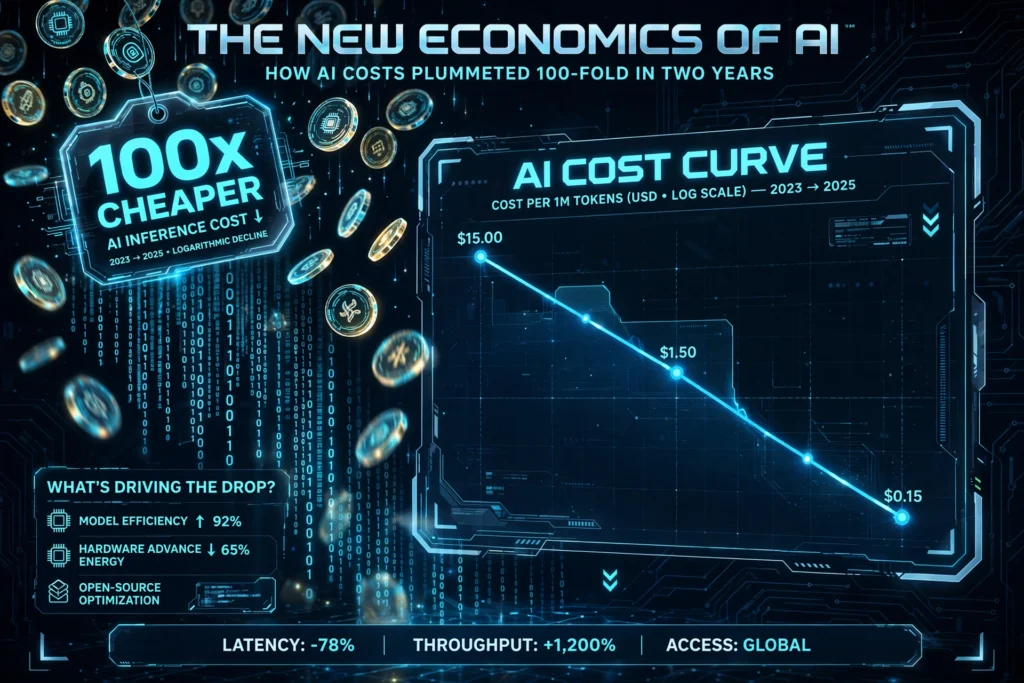
The naming is deliberate and philosophical. If intelligence becomes 100 times cheaper, it won’t just replace existing AI workloads — it will unlock entirely new ones that were never economically possible before. “We think that there’s just going to be smart software all over the place in a way that’s emergent and distributed… much more like the early internet than the mega apps that people are trying to build right now,” Almeida said.
Asked whether TypeSafe is a frontier lab, Almeida pushed back: “The main product of frontier labs is fear or hype. I would like our main product to be intelligence.”
How Much Does Jev Cost and How Can You Try It?
TypeSafe’s pricing claims are aggressive: 20–200x faster and 40–400x cheaper than competing frontier models, with output tokens free and input tokens metered by the billion rather than the million. The company says Jev can produce frontier-level intelligence with latency below 100 milliseconds and can generate hundreds of outputs in parallel from a single prompt.
For now, Jev is being offered through an early-access waitlist — and given that launch-day demand overwhelmed the company’s API, getting in may take some patience. These are the company’s own claims, and independent verification across production workloads hasn’t landed yet. As with any extraordinary benchmark claim, the real test will come as Jev reaches more developers and gets measured against competing models at scale.
What Jev Means for the Future of AI
The Jev launch matters for three reasons beyond the headline numbers:
- It breaks the LLM monopoly on “AI.” For four years, progress in AI has meant bigger language models. Jev is the first serious attempt at a different architecture from a credible inventor — proof that the field can innovate on what models output, not just how big they are.
- It makes ambient intelligence economical. If every software decision can be made intelligent for a fraction of a cent, developers will sprinkle judgment into places they’d never afford an LLM call — from spam filters to safety monitors to real-time routing.
- It reframes the hallucination problem. Instead of trying to make text generators more truthful, Jev sidesteps the problem entirely: machines don’t need essays, they need numbers. For automation, that’s arguably the more honest design.
Competitors will almost certainly follow — as Ronacher notes, “we should have seen this earlier in many ways,” and now that Jev’s utility is apparent, rival “decision models” are likely on the way. TypeSafe itself plans more versions of the model in new modalities.
Frequently Asked Questions
What is the Jev AI model?
Jev is a new AI model released by TypeSafe AI on September 18, 2026. Unlike large language models, it doesn’t output text — it produces probability scores (“calibrated decisions”) between 0 and 1, designed for software automation and classification tasks.
Who created Jev?
Jev was created by Diogo Almeida, an OpenAI researcher who helped build ChatGPT and invented reinforcement learning from human feedback (RLHF). He left OpenAI two years ago to found TypeSafe AI.
Why can’t Jev hallucinate?
Because users define the possible outputs in advance, Jev can only return probability scores for those options — it cannot invent new text or facts. This makes hallucination structurally impossible, though the user must still interpret low-confidence scores carefully.
How much cheaper is Jev than other AI models?
TypeSafe claims Jev is 40–400x cheaper (and 20–200x faster) than competing frontier models, with free output tokens and input tokens metered by the billion instead of the million. Independent verification is still pending.
What is Jev named after?
Jev is named after William Stanley Jevons, the 19th-century economist behind the Jevons Paradox — the idea that making something cheaper often increases its total use. The name reflects TypeSafe’s bet that cheaper intelligence will be used everywhere.
How can developers try Jev?
TypeSafe is currently offering Jev through an early-access waitlist. Launch-day demand was so high it briefly overwhelmed the company’s API, so access may be limited at first.
Will Jev replace ChatGPT?
No. Jev can’t generate text, so it can’t replace chatbots or writing tools. It’s designed to complement LLMs — for example, as a cheap safety monitor or model router — and to handle classification-style tasks far more cheaply.
Conclusion: A Quiet Revolution in How AI Thinks
The Jev AI model launch won’t make as much noise as the next chatbot release — it can’t write you a poem, after all. But its significance may run deeper. By abandoning language as the output of intelligence and replacing it with probabilities, ChatGPT inventor Diogo Almeida is betting that the real AI revolution isn’t in talking to machines, but in machines that can quietly decide.
Whether Jev’s extraordinary speed and cost claims hold up under independent testing remains to be seen. But the developer excitement is real, the waitlist is growing, and for the first time in years, someone credible is asking a genuinely new question about what AI should be. We’ll be watching closely — and updating this guide as benchmarks and reviews roll in.
📚 More from Events Day
Sources: TechCrunch · Tech Startups · TechJuice