

- What: A proposal to make daylight saving time permanent and end the twice-yearly clock changes across the United States.
- Where the bill stands: The Sunshine Protection Act (H.R.139) passed the House 308–117 on July 14, 2026, but has not received a Senate vote.
- What happens this fall: Unless Congress acts, daylight saving time still ends at 2 a.m. local time on Sunday, November 1, 2026 — clocks fall back one hour to 1 a.m.
- The hold-up: Senate leadership is unsure there are enough votes; Sen. Tom Cotton of Arkansas opposes the bill and would block fast-track passage.
- President’s position: President Donald Trump has publicly urged the Senate to pass the bill, calling the clock-switching “disruption and chaos.”
Will permanent daylight savings time finally become the law of the land in 2026? Millions of Americans are asking the question right now — and search interest in the topic is spiking across the United States. After the House of Representatives passed the Sunshine Protection Act this summer by a wide bipartisan margin, it looked as though the twice-yearly ritual of springing forward and falling back might finally be over. But the Senate returned from its five-week recess on September 14 with no vote scheduled on the legislation, and the clock is ticking. With daylight saving time scheduled to end on Sunday, November 1, 2026, here is everything you need to know about the push for permanent daylight savings time, where the bill stands, and what it would mean for your mornings, your evenings, and your calendar.
What Is Permanent Daylight Savings Time?
Permanent daylight savings time means exactly what it sounds like: instead of switching clocks twice a year, the country would stay on daylight saving time (DST) year-round. Clocks would remain one hour ahead of standard time permanently, eliminating both the spring-forward loss of sleep in March and the fall-back shift in November.
(A quick language note: the technically correct term is “daylight saving time,” without the “s.” But “daylight savings time” is what most Americans type into Google — which is why this guide uses the spelling people actually search for.)
Under the federal rules in place today, daylight saving time runs from the second Sunday in March through the first Sunday in November. In 2026, that means DST began on March 8 and — unless a new law intervenes — ends at 2 a.m. local time on Sunday, November 1, when clocks move back one hour to 1 a.m.
Permanent daylight savings time would lock in the “spring” schedule — the brighter evenings most people associate with summer — and keep it through the winter months. Your mornings in December and January would be darker, but your evenings would be brighter. That trade-off between evening light and morning light is the heart of the entire national debate.
When Does Daylight Saving Time End in 2026?
As of right now: yes, you still have to change your clocks this fall. No new law has been enacted, so the existing federal schedule applies:
- Date: Sunday, November 1, 2026
- Time: 2:00 a.m. local time
- Action: Turn clocks back one hour to 1:00 a.m. (“fall back”)
- Result: You gain an extra hour of sleep; sunrises and sunsets arrive about an hour earlier for the winter months.
That single date is the deadline driving the entire legislative drama. With less than two months between the Senate’s return in mid-September and November 1, the window for Congress to act before the fall clock change is narrowing fast.
The Sunshine Protection Act: Where the Bill Stands Now
The vehicle for permanent daylight savings time is the Sunshine Protection Act, designated H.R.139 in the House and S.29 in the Senate. Here is the timeline so far:
- July 14, 2026: The House passed H.R.139 by a bipartisan vote of 308–117.
- July 15, 2026: The Senate companion bill, S.29, was referred to the Senate Commerce, Science, and Transportation Committee.
- September 14, 2026: The Senate returned from a five-week recess — with no floor vote scheduled on the bill.
For the proposal to become law, it still needs to clear the Senate and be signed by the president. Passing the House was a major milestone — but in the U.S. legislative process, it is only the first half of the journey.
Why Hasn’t the Senate Voted Yet?
The short answer: Senate leaders are not convinced the votes are there. Senate Majority Leader John Thune of South Dakota has previously questioned whether enough senators support making daylight savings time permanent, and when reporters asked him recently about whether the bill could clear the Senate’s 60-vote threshold, he answered only: “Remains to be seen.”
The most vocal obstacle is Sen. Tom Cotton of Arkansas. Cotton has made clear he would object to passing the bill by unanimous consent — the fast-track procedure the Senate used to pass an identical version of the bill back in 2022. Unanimous consent requires that no senator object, so a single “no” kills it. Cotton has also argued that the 60 votes needed to overcome a filibuster are unlikely to materialize. Other senators, including Steve Daines of Montana, have said the bill will not “see the light of day” in the Senate this year.
There is also a practical calendar problem. Reports in September 2026 described the Senate floor schedule as crowded with other priorities — including debates over cryptocurrency regulation — leaving little room for the clock bill before November 1. With competing demands and genuine disagreement over the policy, the Sunshine Protection Act has stalled at exactly the moment its supporters need momentum most.
Trump’s Push for Permanent Daylight Savings Time
President Donald Trump has become one of the most prominent voices calling for an end to the twice-yearly clock changes. In a mid-August post on Truth Social, he urged the Senate to act, writing that more sun later in the day is “better (including for fighting crime!)” and that the twice-yearly switching creates “disruption and chaos.”
The president’s backing gives the bill its strongest political tailwind: when the occupant of the Oval Office is publicly pressuring the Senate majority leader to move a bill, it is hard for the chamber to ignore. So far, however, even presidential pressure has not produced a scheduled vote. Bipartisan House support and White House support together still have to survive the Senate’s procedural math — and that is where the bill remains stuck.
Could States Opt Out?
Under H.R.139, states would retain the right to opt out of permanent daylight saving time and remain on standard time year-round — but only if their state legislatures act before the law takes effect. That opt-out provision was included to address concerns from northern and western lawmakers, whose constituents would face the darkest winter mornings under a permanent-DST regime. So far, the concession has not reduced opposition in the Senate.
It is worth noting that under current federal law, states already have a one-sided choice: they can exempt themselves from daylight saving time and observe standard time year-round (as Arizona and Hawaii do), but they cannot establish permanent daylight saving time on their own. Only a federal law can unlock that option — which is exactly what the Sunshine Protection Act would do.

The Debate: Later Evenings vs. Brighter Mornings
Strip away the politics and the argument comes down to one simple question: would Americans benefit more from later sunsets or earlier sunrises?
The Case for Permanent Daylight Savings Time
Supporters — including many business groups, recreation advocates, and the bill’s sponsors — argue that permanent daylight savings time would:
- End the twice-yearly disruption of resetting clocks, which studies have linked to sleep disturbances, spikes in heart attacks and strokes in the days after the spring change, and workplace accidents.
- Give families more usable evening daylight in winter for exercise, shopping, dining out, and after-work activities — boosting local businesses and tourism.
- Potentially reduce evening crime, as the president has argued, since fewer activities would take place after dark.
- Simplify life — no more forgetting to change the microwave clock, no more “which way do the clocks go?” confusion twice a year.
The Case Against It
Opponents — including Sen. Cotton, sleep scientists, and the advocacy group Save Standard Time — counter that permanent daylight saving time would:
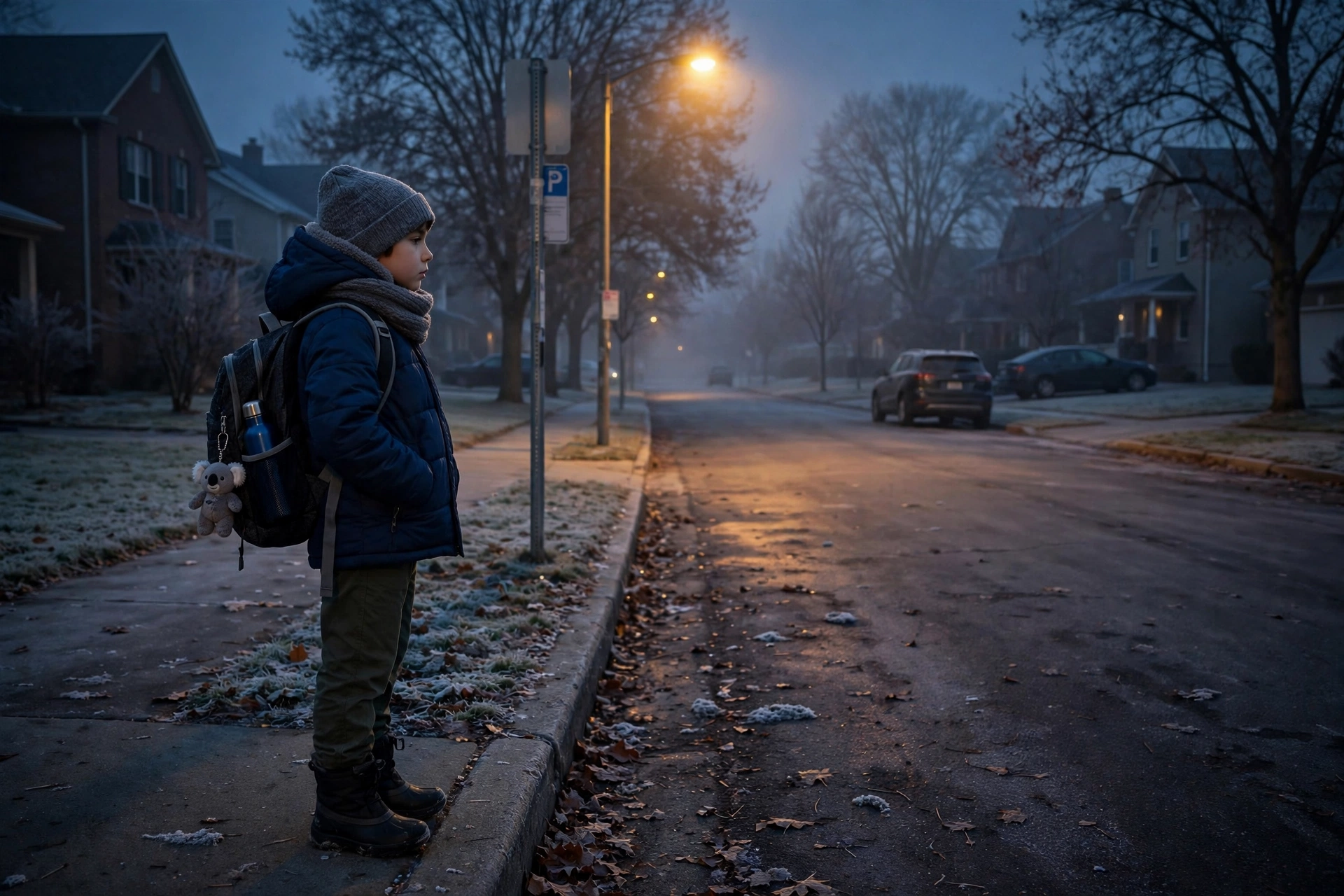
- Produce darker winter mornings, with some communities not seeing sunrise until well after the morning commute. Children would wait for school buses and walk to school in the dark.
- Misalign with natural circadian rhythms. Sleep experts note that standard time — with earlier sunrises — is more consistent with the body’s internal clock, and brighter mornings improve alertness and morning visibility.
- Repeat a failed experiment. The U.S. tried year-round daylight saving time in 1974 during the energy crisis, and it was so unpopular — particularly over dark winter mornings — that Congress reversed course within a year.
This is not a purely partisan fight. Both parties are split: the House vote was bipartisan, and opposition in the Senate includes voices from both sides of the aisle who simply prefer permanent standard time to permanent daylight time.
A Short History of America’s Time Wars
The United States has been arguing about its clocks for more than a century:
- 1918: The Standard Time Act first established federal time zones and daylight saving time.
- 1966: The Uniform Time Act standardized the start and end dates of DST nationwide — the framework still in use today.
- 1974: President Nixon signed year-round daylight saving time into law as an energy-saving measure. Public backlash over dark winter mornings forced a repeal within the year.
- 2007: The Energy Policy Act of 2005 extended DST — starting it earlier in March and ending it later in November — the schedule we still follow.
- 2018: Florida passed its own “Sunshine Protection Act,” sparking the modern national movement.
- 2022: The Senate passed the Sunshine Protection Act by unanimous consent — only for the bill to die in the House.
- 2026: The House passed the bill 308–117 — but the Senate has yet to vote.
The pattern is striking: for a decade, one chamber passes the bill and the other lets it die. Whether 2026 breaks that cycle depends entirely on what happens in the Senate before November 1.
What Permanent Daylight Savings Time Would Mean for Your Daily Life
If the Sunshine Protection Act somehow became law, the most visible change would arrive this winter: sunsets would come about an hour later than they do under standard time, while sunrises would come about an hour later too. In practice:
- Evenings: More light after work and school — evening walks, youth sports practices, and outdoor dining would stay viable deeper into winter.
- Mornings: In northern cities, sunrise could fall after 8:00 a.m. for weeks around the winter solstice. Expect darker school commutes and later-lit mornings.
- Health: No more spring-forward sleep disruption in March — but sleep researchers caution that year-round DST may shift people’s body clocks later, which has its own health costs.
- Travel & tech: Airlines, broadcasters, and tech companies would face a one-time scheduling headache — the same kind of adjustment they handle every time a time zone rule changes.
- The states: Arizona and Hawaii, which skip DST entirely today, would be unaffected unless their legislatures chose otherwise.
For now, though, none of this is happening. The only date that matters on your calendar is November 1, 2026 — when, barring congressional action, you fall back like always.
Frequently Asked Questions About Permanent Daylight Savings Time
1. Is permanent daylight saving time becoming law in the United States?
Not yet. The House passed the Sunshine Protection Act of 2025 (H.R.139) on July 14, 2026, by a 308–117 vote. The Senate companion bill (S.29) was referred to the Senate Commerce Committee on July 15 and has not been scheduled for a floor vote. It still needs Senate approval and the president’s signature to become law.
2. When does daylight saving time end in 2026?
Daylight saving time ends at 2 a.m. local time on Sunday, November 1, 2026. Clocks move back one hour to 1 a.m., giving most Americans an extra hour of sleep while making sunrises and sunsets arrive about an hour earlier.
3. Will we still change the clocks this fall?
Yes — almost certainly. With no new law enacted and no Senate vote scheduled as of mid-September, the November 1 fall-back remains on the calendar. Americans should plan to turn their clocks back as usual.
4. What would permanent daylight saving time mean for winter mornings?
Mornings would be darker: in many parts of the country, sunrise would not occur until 8:00 a.m. or later around the winter solstice. Critics argue this would leave children commuting to school in the dark; supporters say the trade-off is worth it for brighter winter evenings.
5. Which states would be affected by permanent daylight saving time?
Under the proposed bill, all states that currently observe daylight saving time would stay on it year-round — but states could opt out and remain on standard time if their legislatures act before the law takes effect. Arizona and Hawaii, which do not observe DST today, would be largely unaffected.
6. Has the U.S. ever tried permanent daylight saving time before?
Yes — in 1974, during the energy crisis. The experiment proved deeply unpopular because of dark winter mornings, and Congress repealed it within the year. Supporters of the current bill argue that modern lifestyles make the trade-off more acceptable today.
7. Why is the Senate blocking the bill?
There is no single blocker: Sen. Tom Cotton of Arkansas opposes the policy and would object to fast-track passage; Senate Majority Leader John Thune questions whether 60 votes exist for cloture; and the chamber’s crowded floor calendar — packed with competing priorities ahead of November 1 — has left no room for a vote so far.
Conclusion: The Clock Is Ticking on the Clock Bill
The push for permanent daylight savings time is closer to reality than it has been in years: a bipartisan House majority has voted yes, and the president is publicly demanding action. Yet the bill’s fate now rests with a Senate that has not scheduled a vote, a vocal opponent in Sen. Tom Cotton, and a legislative calendar that keeps filling up with other fights. With November 1, 2026 approaching — the date the nation falls back whether Congress acts or not — the next few weeks will decide whether Americans change their clocks for the last time this fall, or keep the ritual going for years to come.
Sources: USA Today; NorthJersey.com; Tech Times.