

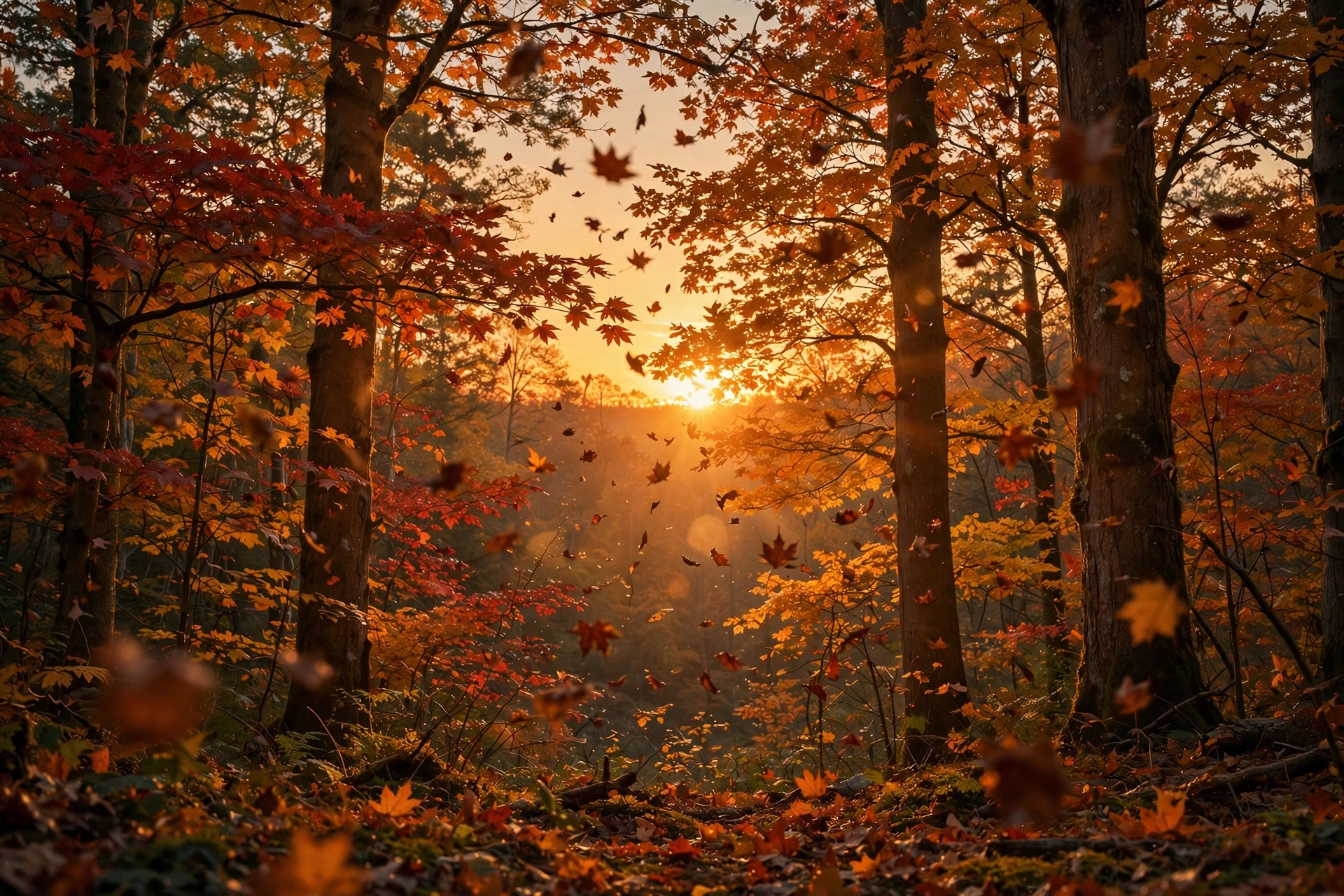
The first day of fall 2026 is here — the moment the Northern Hemisphere officially says goodbye to summer and welcomes sweater weather, golden leaves, and pumpkin everything. This year, astronomical fall begins on Tuesday, September 22, 2026, at the exact moment of the autumn equinox: 8:05 p.m. EDT (7:05 p.m. CDT / 5:05 p.m. PDT). If you are in the United Kingdom, Europe, or anywhere east of Greenwich, the same instant falls on Wednesday, September 23 — which is why you will see both dates listed depending on the source.
🍂 Key Facts: First Day of Fall 2026
- Date: Tuesday, September 22, 2026 (United States); Wednesday, September 23 (UK, Europe, Asia)
- Exact equinox moment: 00:05 UTC on September 23, 2026 — 8:05 p.m. EDT / 7:05 p.m. CDT / 5:05 p.m. PDT on September 22
- Astronomical event: The September (autumnal) equinox, when the Sun crosses the celestial equator heading south
- What it means: Start of astronomical fall in the Northern Hemisphere — and the start of spring in the Southern Hemisphere
- Meteorological fall: Climatologists started it earlier, on September 1, 2026
- Also called: Autumnal equinox, September equinox, Mabon (neopagan tradition), the second harvest
No wonder searches are spiking: millions of Americans are asking “is today the first day of fall?” this week. Whether you track the seasons by the sky or by the calendar, this guide covers everything — the science of the equinox, why the date shifts each year, how cultures around the world celebrate the harvest season, meaningful ways to mark the day, and autumn quotes to share with the people you love.
When Is the First Day of Fall 2026?
The first day of fall 2026 is Tuesday, September 22, 2026, for everyone in the United States. The equinox — the single, precise instant that marks the change of seasons — happens at 00:05 UTC on September 23. Because the U.S. sits west of Greenwich, that moment still lands on the evening of September 22 in every American time zone:
- Eastern (EDT): 8:05 p.m., Tuesday, September 22
- Central (CDT): 7:05 p.m., Tuesday, September 22
- Mountain (MDT): 6:05 p.m., Tuesday, September 22
- Pacific (PDT): 5:05 p.m., Tuesday, September 22
- Hawaii (HST): 2:05 p.m., Tuesday, September 22
East of UTC, the calendar has already flipped: in London it is 1:05 a.m. BST on Wednesday, September 23, and across Europe, Africa, Asia, and Australia it is September 23 as well. So both “September 22” and “September 23” are correct answers — it simply depends on where you are standing on the planet. Most American calendars, almanacs, and weather outlets list September 22.
There is one exception worth knowing: meteorological fall. Meteorologists and climatologists define the seasons by temperature cycles rather than astronomy, and they always start fall on September 1 — three tidy months of September, October, and November. If your weather app declared fall “started” three weeks ago, that is why. Most calendars and almanac references follow the astronomical definition, which tracks the Sun and Earth’s tilt.
What Is the Autumn Equinox? The Science Explained
An equinox is one of two moments each year when Earth’s axis of rotation points neither toward nor away from the Sun. At that instant, the center of the Sun crosses the plane of Earth’s equator, and observers at the equator see the Sun directly overhead at noon. NASA describes equinoxes as some of humanity’s earliest predictable astronomical events — ancient observatories around the world were built to track them alongside the solstices.
At the September (southward) equinox, the Sun moves from the northern celestial hemisphere to the southern one. From this day forward, the Northern Hemisphere tilts progressively away from the Sun: days get shorter, nights get longer, and temperatures cool. Astronomers sometimes call it the southward equinox to distinguish it from the March (northward) equinox, which starts spring in the Northern Hemisphere. In 2026, the March equinox occurred on March 20 at 14:46 UTC (7:46 a.m. EDT).
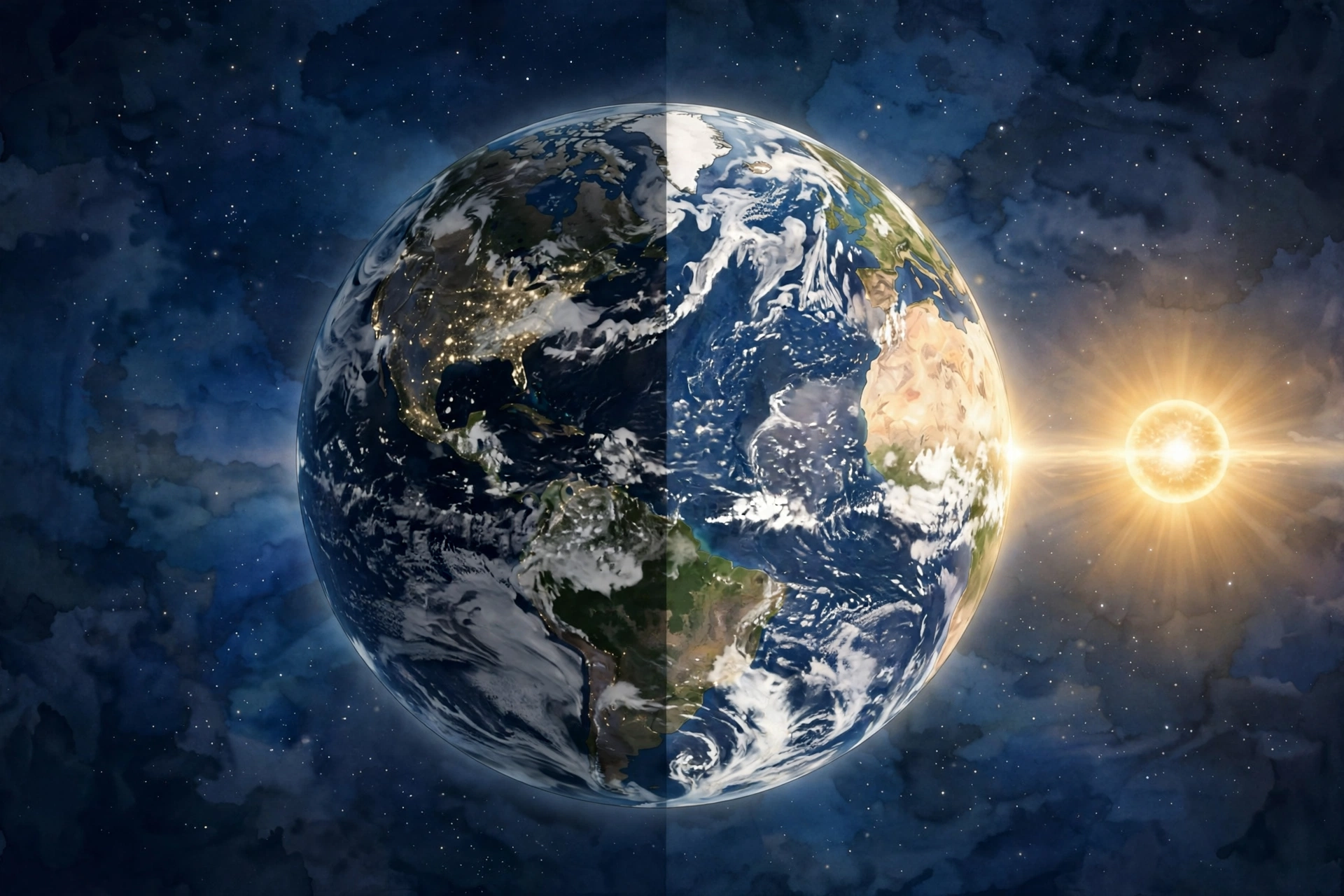
The word equinox comes from the Latin aequus (equal) and nox (night) — “equal night.” But here is the delightful catch: day and night are not exactly equal on the equinox. Sunrise is defined as the moment the Sun’s upper edge peeks above the horizon, and Earth’s atmosphere refracts (bends) sunlight, so we get a few extra minutes of daylight. The truly equal day — called the equilux — actually falls a few days before the equinox in the fall, and a few days after it in the spring, depending on your latitude.
Why Does the First Day of Fall Change Dates?
If you have ever wondered why fall sometimes starts on September 22 and sometimes on September 23, the answer is orbital bookkeeping. A calendar year is 365 days, but Earth takes about 365.25 days to orbit the Sun. That extra quarter-day pushes the equinox roughly six hours later each year — until a leap year resets the clock.
That is why the September equinox always lands on September 22 or 23, with September 21 or 24 possible only at the extreme edges of the cycle. In 2026 the moment falls at 00:05 UTC on September 23; by 2027 the timing shifts again. It is the same reason the March equinox and the solstices drift year to year. Far from being a calendar glitch, this slow wobble is a reminder that our tidy months are an approximation of a much grander orbit.
Fall Equinox Traditions Around the World
Humans have marked the harvest season for millennia, and the September equinox sits at the heart of celebrations on every continent. Here are the most beloved:
🌕 Mid-Autumn Festival — China & Vietnam
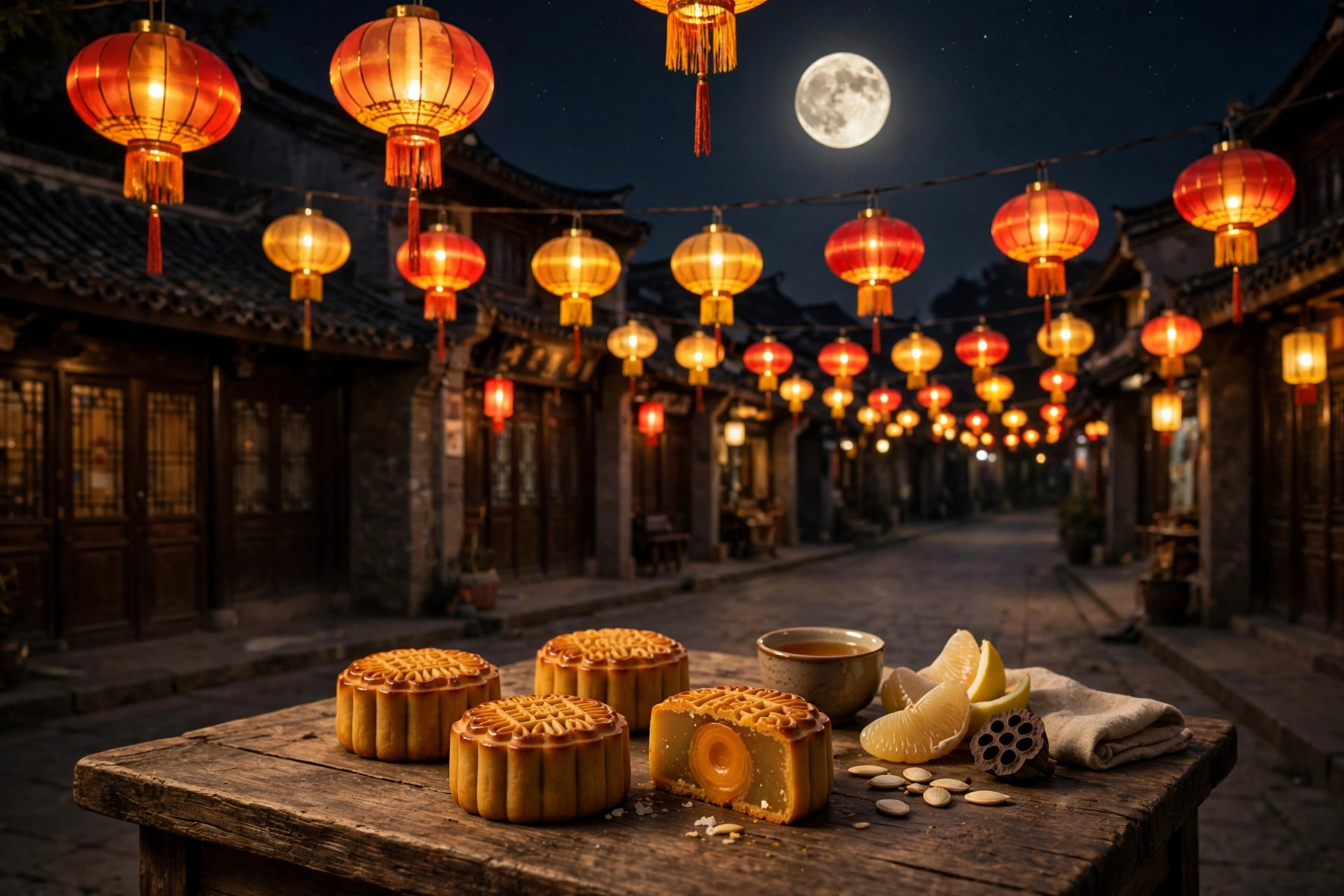
The Mid-Autumn Festival (Moon Festival) celebrates the abundance of the summer harvest under the brightest full moon of autumn. Families gather, light colorful lanterns, and share mooncakes filled with sweet-bean or lotus-seed paste. In Vietnam, Tết Trung Thu features lantern parades, masked children, and mooncakes — it is one of the most joyful nights of the year for kids.
🌾 Chuseok — Korea
Chuseok, Korea’s major harvest festival, brings families together for ancestral rites, traditional folk games, and lavish feasting on the new harvest. Often called “Korean Thanksgiving,” it is one of the country’s most important holidays.
🎑 Tsukimi & Ohigan — Japan
During Tsukimi (moon viewing), people admire the harvest moon and eat rice dumplings while appreciating the beauty of the season. Ohigan is a Buddhist custom tied directly to the equinox: because the sun sets due west — the direction Buddhists associate with the afterlife — families visit and clean ancestors’ graves, leave flowers, and gather with relatives.
🍁 Mabon — Neopagan Second Harvest
Mabon is the neopagan festival of the autumn equinox, celebrated as the second harvest and a time of balance and gratitude. Named for Mabon ap Modron, a figure from Welsh mythology, it is one of the eight Sabbats on the Wheel of the Year. Practitioners mark it with harvest feasts, cornucopias and wreaths, apple picking, nature walks, candle rituals, and offerings of thanks to the Earth. In the UK, celebrants gather at Stonehenge and Castlerigg to watch the equinox sunrise.
⛪ Michaelmas & Harvest Festivals — British Isles
Around the equinox, the British Isles observe Michaelmas (September 29), a Christian feast marking the end of the harvest season, incorporating older pagan customs like weaving corn dolls from the last sheaves of grain — and traditionally a goose dinner. Village harvest festivals fill churches with displays of crops, and congregations donate food to those in need.
🍺 Erntedankfest — Germany
Germany’s Erntedankfest (Harvest Thanksgiving) features church services and festive parades with decorated harvest carts — a centuries-old expression of thanks for the year’s crops.
🕎 Sukkot — Jewish Feast of Tabernacles
Sukkot commemorates the harvest season with rituals centered on temporary outdoor shelters (sukkahs) and symbolic offerings of the season’s fruits — a week of eating, gathering, and gratitude under the open sky.
🌍 More Harvest Celebrations
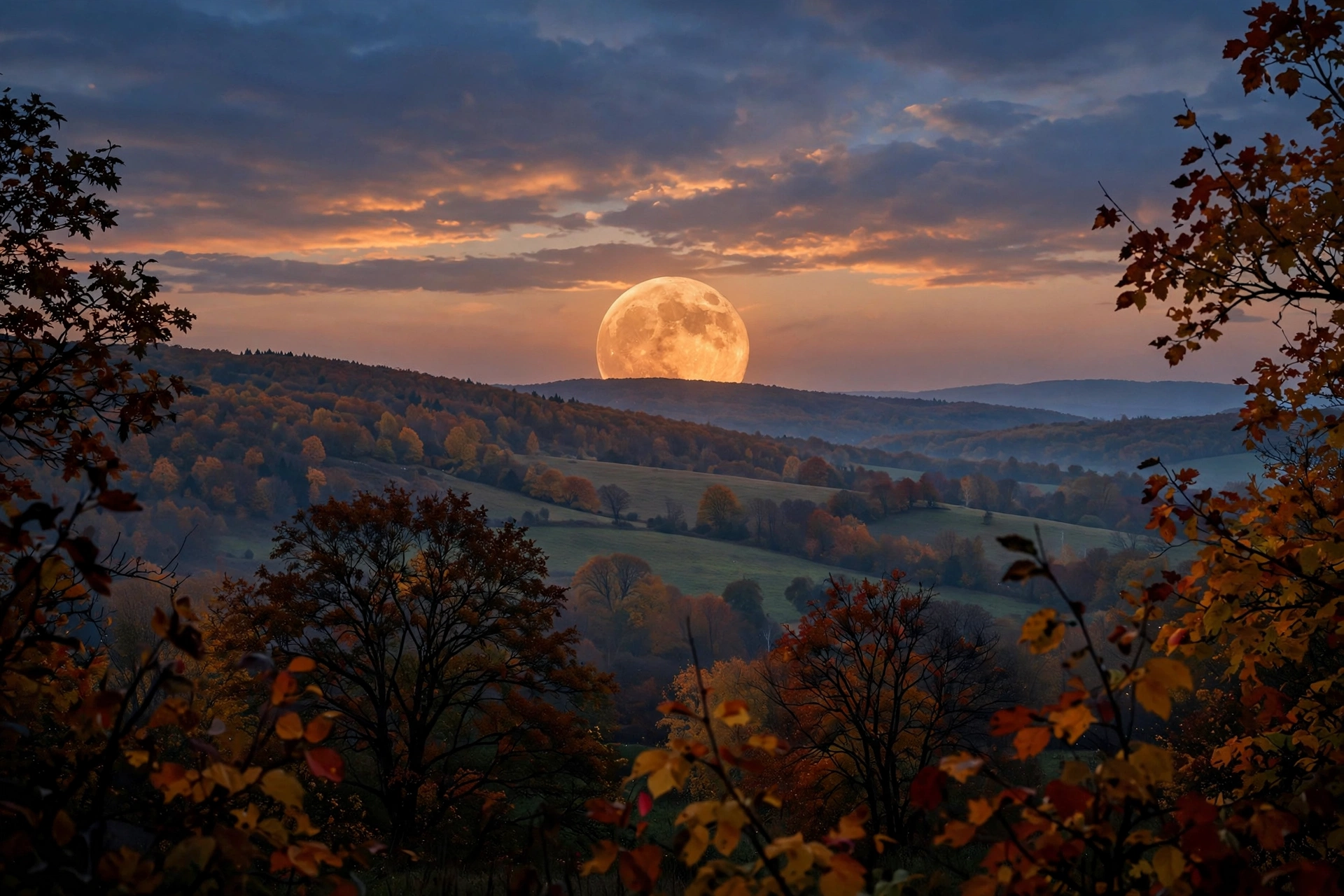
In Nigeria, the Yoruba honor the new yam harvest with dances and merriment for their ancestors. In North America, Indigenous peoples such as the Iroquois traditionally gathered for the corn dance, giving thanks for the maturation of grains. And the September equinox itself determines which full moon is crowned the year’s Harvest Moon — the famously bright moon that rises near sunset for several evenings in a row.
12 Meaningful Ways to Celebrate the First Day of Fall
You do not need a festival to honor the season. Try any of these simple rituals on September 22:
- Watch the sunset at 8:05 p.m. EDT — step outside at the exact equinox moment and notice how low and golden the light has become.
- Take a fall foliage walk — leaves are already turning in the northern states; bring a camera and collect your favorites.
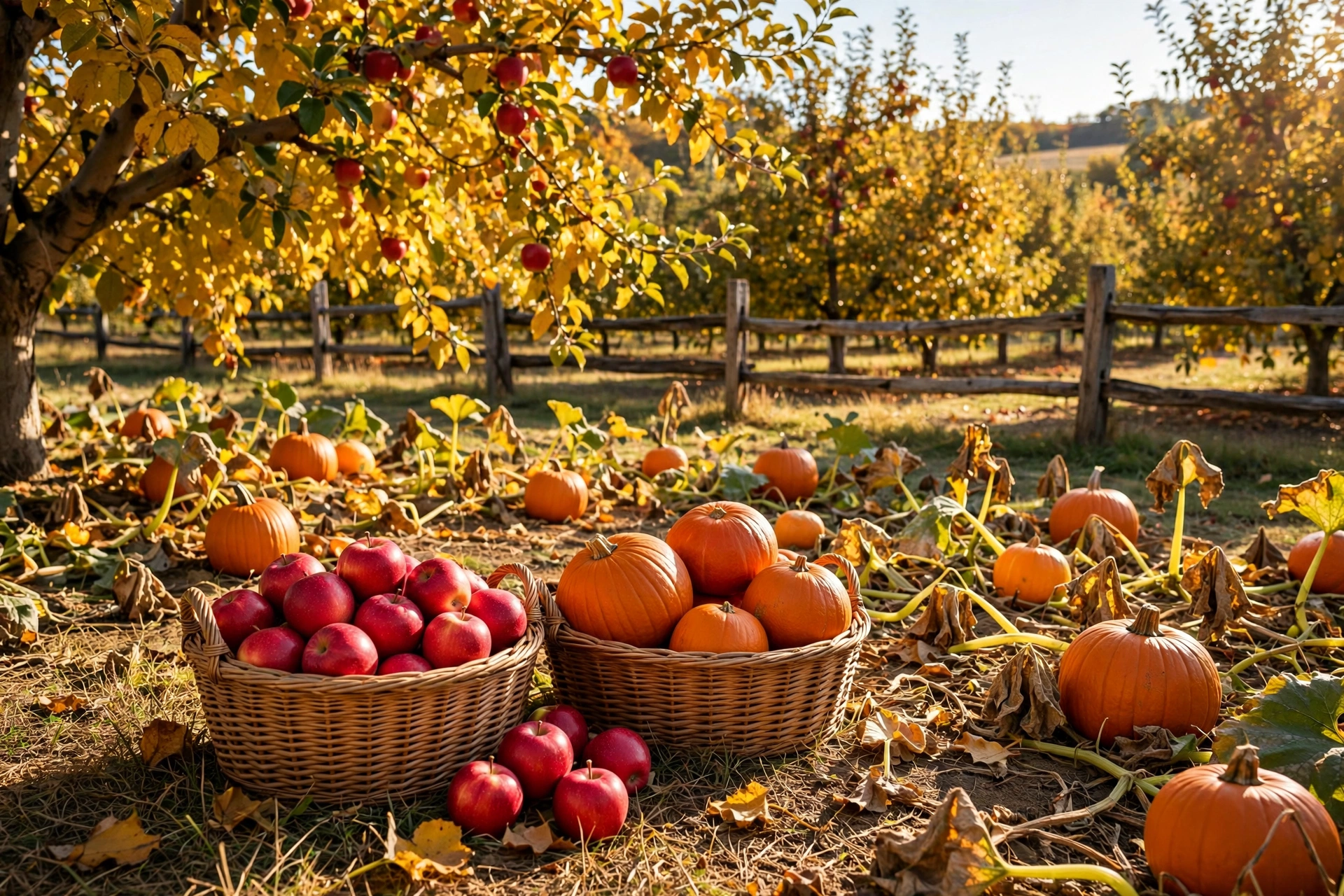
- Go apple or pumpkin picking — the classic Mabon activity and the official kickoff of harvest season.
- Build a gratitude cornucopia — fill a basket with seasonal produce and share it with a neighbor or food bank.
- Bake something spiced — apple pie, pumpkin bread, or mulled cider with cinnamon and cloves.
- Light a candle at dusk — a simple Mabon-inspired ritual of balance: one light for the summer that was, one intention for the season ahead.
- Stargaze the Harvest Moon — the full moon nearest the equinox rises big, bright, and orange near sunset.
- Declutter one room — “release what no longer serves you,” as the old harvest wisdom goes, and make space for the cozy months.
- Start a fall reading list — longer nights are made for books, blankets, and tea.
- Write autumn wishes — send the quotes below to friends and family to mark the new season.
- Plan a harvest dinner — roast seasonal vegetables, invite friends, and toast the year’s abundance.
- Visit a local fall festival or corn maze — agricultural fairs and harvest markets peak right after the equinox.
First Day of Fall Wishes & Quotes to Share
Welcome the season with words. Here are original fall wishes and quotes from Events Day — perfect for cards, captions, and texts:
“Happy first day of fall! May your season be as golden as the leaves and as sweet as apple cider.”
“The equinox reminds us that balance is beautiful. Wishing you equal parts rest and adventure this autumn.”
“Sweater weather is officially here. Here’s to crisp mornings, warm drinks, and everything pumpkin.”
“On this first day of fall, may you harvest happiness, gather gratitude, and let go of what no longer serves you.”
“Autumn shows us how beautiful it is to let things go. Happy fall, y’all!”
“May your fall be filled with bonfires, good books, long walks, and the people you love most.”
“The leaves are falling, the nights are growing longer, and the best season of all has begun. Happy autumn equinox!”
“Wishing you a season of cozy blankets, crackling fires, and quiet moments under the Harvest Moon.”
“Fall is nature’s way of saying: slow down, breathe deep, and be thankful. Happy first day of fall 2026!”
“New season, new beginnings. May autumn bring you balance, abundance, and beautiful change.”
First Day of Fall 2026 FAQs
When is the first day of fall 2026?
The first day of astronomical fall 2026 is Tuesday, September 22, 2026, in the United States (8:05 p.m. EDT). In the UK, Europe, and Asia it is Wednesday, September 23, because the equinox instant — 00:05 UTC on September 23 — falls after midnight there. Meteorological fall began earlier, on September 1.
What time exactly is the autumn equinox 2026?
The 2026 September equinox occurs at 00:05 UTC on September 23, 2026 — that is 8:05 p.m. EDT, 7:05 p.m. CDT, and 5:05 p.m. PDT on Tuesday, September 22. The equinox happens at the same instant everywhere on Earth; only the local clock time differs.
Is the first day of fall September 22 or September 23?
Both — it depends on your time zone. The equinox is a single worldwide instant (00:05 UTC, September 23). Everywhere west of Greenwich — including all of the Americas — that moment falls on the evening of September 22, so American calendars list the 22nd. East of Greenwich, it is already September 23.
What is the difference between astronomical and meteorological fall?
Astronomical fall begins at the September equinox (September 22, 2026) and is based on Earth’s position relative to the Sun. Meteorological fall always runs September 1 – November 30 and is based on annual temperature cycles, which makes it easier for climatologists to compare seasonal weather statistics.
Are day and night really equal on the equinox?
Not exactly. Because of atmospheric refraction and how sunrise is defined (the Sun’s upper edge crossing the horizon), we get slightly more than 12 hours of daylight on the equinox. The truly equal day, called the equilux, occurs a few days before the autumn equinox for most Northern Hemisphere locations.
Why does the first day of fall change dates each year?
Earth’s orbit takes about 365.25 days, while our calendar year is 365 days. The extra quarter-day pushes the equinox about six hours later each year until a leap year resets it. That is why the September equinox always falls on September 22 or 23 (rarely the 21st or 24th).
What is Mabon?
Mabon is the neopagan festival of the autumn equinox, observed as the second harvest and a celebration of balance, gratitude, and the Earth’s bounty. It is one of eight Sabbats on the Wheel of the Year, marked with feasts, rituals, apple picking, and offerings of thanks.
Fall Weather: What Comes Next
The equinox is also a turning point for weather across the United States. As the Northern Hemisphere tilts away from the Sun, storm patterns shift: Atlantic hurricane season is near its statistical peak in September, and early-season nor’easters begin to threaten the Northeast coast. If you are planning fall travel, it is worth watching both the tropics and the first autumn storms — check our El Niño 2026 winter outlook for how this season’s climate pattern could shape the months ahead.
The Bottom Line
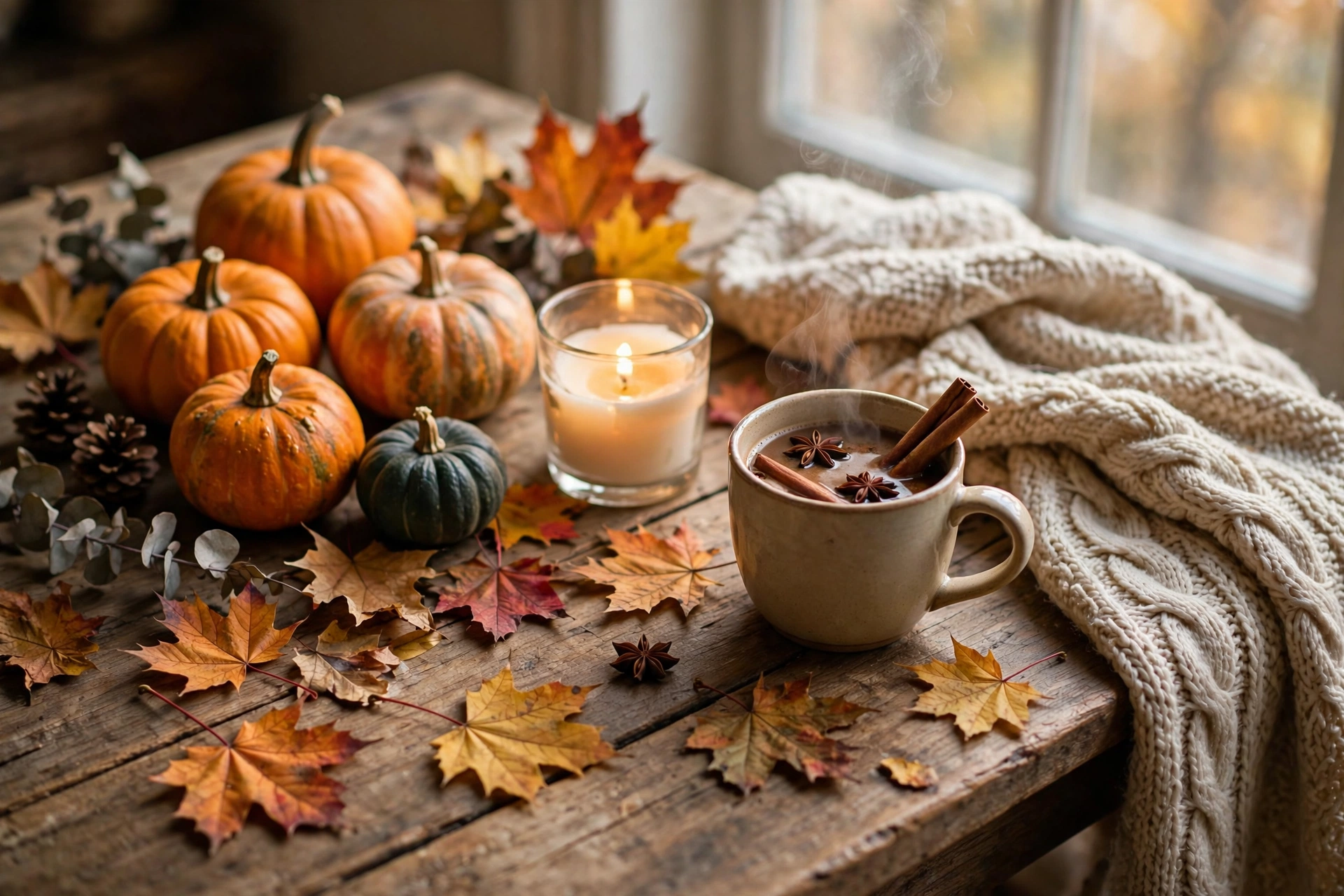
The first day of fall 2026 arrives on Tuesday, September 22 — at 8:05 p.m. EDT, the Sun crosses the celestial equator and autumn officially begins in the Northern Hemisphere. Whether you mark it with mooncakes and lanterns, a quiet walk under the Harvest Moon, or simply a pumpkin-spiced everything, the equinox is an invitation to pause, give thanks, and find your balance as the light shifts.
Happy first day of fall! 🍂
More from Events Day
Sources: NASA — Embracing the Equinox; TimeAndDate — Fall 2026; Farmers’ Almanac — Fall Equinox 2026; EarthSky — 2026 September Equinox.